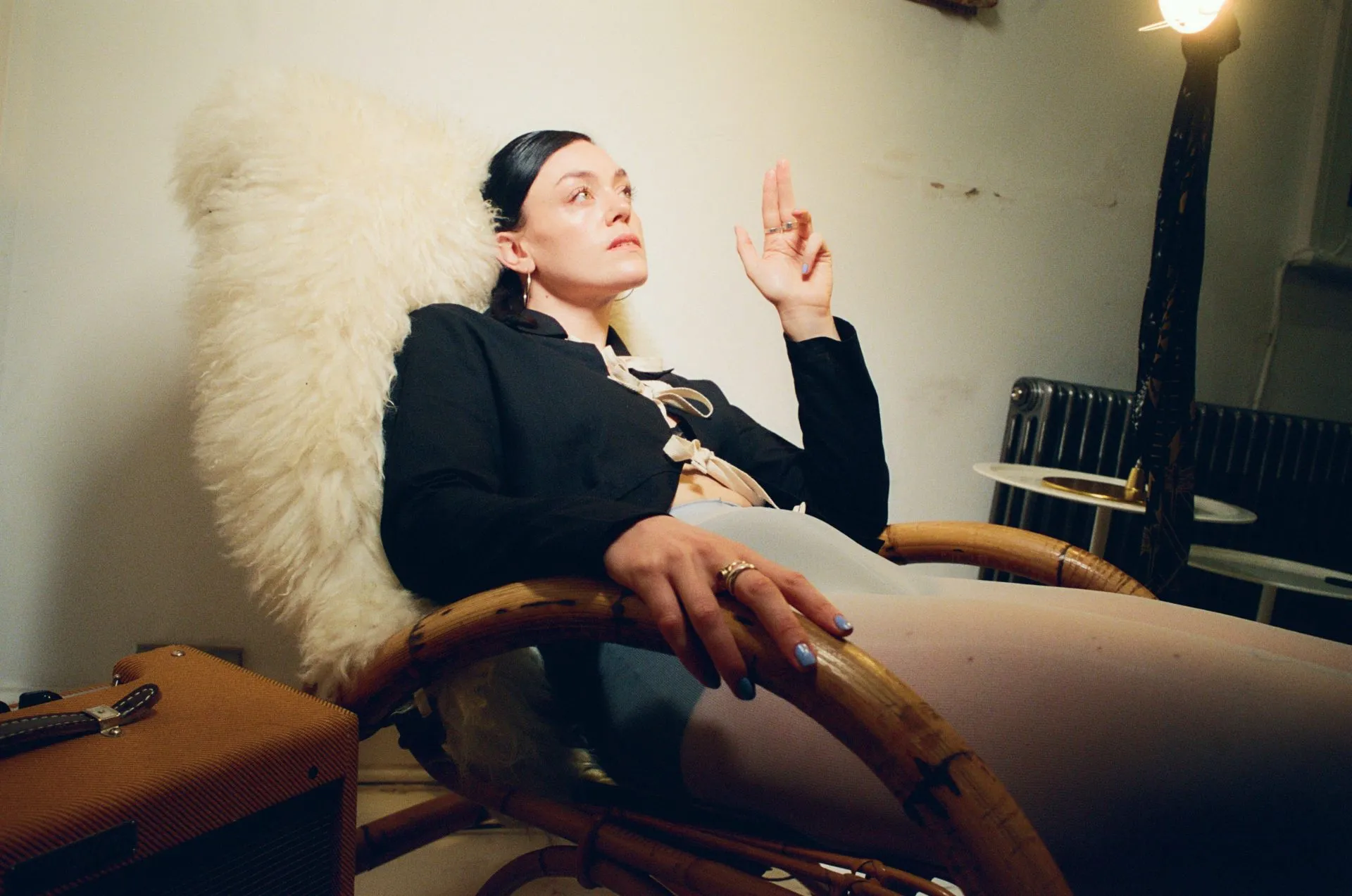
“Even though I deal with heavy themes of consent and like violence towards women, I really want the record to be, be a celebration of womanhood, and yes, we are reflecting on these difficult moments, but we can turn them into ones that that we can jump on top of and dance towards, and, you know, give a handshake or give a punch in the face or whatever, you want.” Iona Zajac is telling me about her debut album Bang which came out at the tail end of last year, a record that vividly documents personal and universal abuses but also explores the experiences of women.
The last few years have been a whirlwind for Zajac, from supporting Alison Moyet and The Mary Wallopers to being asked to play with The Pogues, getting a manager, becoming a solo artist and releasing her debut album, taking a non-traditional route into music. Hers is an unlikely fairy tale, culminating in an excellent solo debut, more dates with The Pogues and her own solo shows.
Recorded at Post Electric Studio in Edinburgh with producer Dani Bennett-Spragg, alongside Joe Taylor (drums), Ellie Mason (guitar, synths), and Ben Manning (bass), Bang weaves together a tapestry of songs that give voice to the spectrum of experiences of a young woman and delve into the influence of Celtic and European folk and art rock. Drawing on influences from Sibylle Baier and Portishead to her Polish and Ukrainian heritage. Zajac’s solo work is striking and riven with depth and experience, stretching between stripped back acoustic moments and a full-band that burn with an intensity that reflects her live performances.
“It’s quite a distillation of the last 15 years that have come up in songs, as a way of processing things, or just reflecting on life.” She continues “A theme that came up a lot for me was reflecting on my experience of being a young woman and my female friends’ experiences of it being pretty hard, especially being a teenager and and coming into your early 20s. Looking back on all of the stuff you have to put up with and and so I wouldn’t say it’s just about me at all. It’s definitely a record that’s a that’s a response to what I see, what I see in the news, and what I have grown up with.”
In February last year, the Glasgow artist released her first new music since 2023 with the gorgeously yearning and enveloping single ‘Summer‘. The release coincided with her joining Alison Moyet as main support for a sold-out 25-date theatre UK tour, which included standout shows at London’s Palladium, Dublin’s 3Olympia, and Belfast’s Ulster Hall. Zajac also accepted the honour of opening for The Pogues’ Dublin show in December last year, in the role of vocalist a role that she reprised on tour with them last May.
“In the last few years I’ve just been unbelievably lucky with the support slots I’ve got, I’ve done, I’ve played so many gigs, and supports.” She enthuses, “Obviously supporting is hard and that the fees aren’t very good. Yeah and having to sort out your own travel and your accommodation, and nobody’s going to know you when you walk out on stage. And you kind of, you know you’ve got a bit of a challenge, but the flip side of that coin is that you have this audience in front of you that you wouldn’t have otherwise, and it’s an opportunity to convert them, or bring them on board.
“So I think, having just done that and played to all kinds of different people’s crowds, and some people, some crowds, you know, Allison Moyet’s crowds that were all seated, all there from doors open, and like you could hear a pin drop. Which is different to opening for the likes of the Mary Walopers, where everyone is absolutely half cut, it’s a bit of a challenge or when opening for the Pogues in the 3arena last year, you know, you kind of go on stage with the band, we say ‘let’s expect everyone to be talking, and then if they’re not, then that’s a win!”
By early summer, Zajac returned to the stage with The Pogues, reprising her role from their celebrated reunion in Dublin the previous December. She joined Spider Stacey, James Fearnley, Jem Finer and a host of acclaimed new touring members, including Holly Mullineux, Nadine Shah, Lisa O’Neill, and Lankum’s Daragh Lynch. Together, they brought Pogues classics to life in front of packed crowds at Brixton’s O2 Academy, Glasgow’s Barrowland Ballroom (two nights), and Manchester’s Apollo among others.
Her collaboration wth The Pogues happened quite organically as she developed a relationship with Spider Stacey, she met him “at some gigs where people like the Mary Wallopers or Lankum had got him up on stage and like chatting away backstage and we just became friends with him and his lovely partner, Louise. And I think they just heard me singing.”
“When the 40th anniversary of Red Roses for me was coming around, Spider got in touch to ask if I would sing ‘Poor Paddy works on the Railways’. I was like, yeah, of course! But it was a song that I couldn’t really imagine me singing, because I’ve always really sung with quite a soft voice, and this is a song that you really have to belt it, So I found this, this bigger voice through singing with them, which I think has really seeped into my own music and my own performances, now I’m kind of in the band and play the harp, and I sing a few songs, and we’ve done the the anniversary tour of Rum Sodomy and the Lash, then it’s just grown arms and legs, “ she enthuses.
“I’s a huge tribute to Shane and the songs he wrote and people are, are mad to hear them. So the the energy at those gigs is, is really like the most amazing energy I’ve witnessed at gigs.”
Reflecting on her favourite Pogues songs to perform, “There’s the three I sing are ‘Poor Paddy’, ‘The Parting Glass’ and ‘I’m a Man You Don’t Meet Every Day,’ which I love singing, but the. Songs that Shane wrote, like ‘Rainy night in Soho’ and ‘A Pair of Brown Eyes’, ‘The Old Main Drag’. They’re such amazing songs. The lyrics in those songs, that you can relate to at any point in time, and they’re amazing fun to play as well. Some of the instrumentals, like ‘A Pistol for Paddy Garcia’ is a song that I wasn’t even familiar with before, before we did the tour.”
“I was born in to a London mum and a Scottish dad, and then we moved to Scotland when I was four, and mum and dad were both actors, but they were very, very into me and my sister playing traditional Scottish music,” She recalls of her early experience in music, “I learned the piano, and then I played, moved to the harp through traditional music, and then picked up the guitar and in lockdown, really”
Zajac explains of her different route into the music world.”I never learned to read music or anything, but music was always very much around. Then I studied English Literature. I never really played the harp in a band, quite casually, but I didn’t think I was able for it, really. Then I studied English Literature and did a creative writing dissertation, and I produced a book of poetry and then finished uni, and thought I was going to go traveling or figure out what to do.”
“Then Covid happened instead. So I was at home, twiddling my thumbs, as we all were, and decided to try learning the guitar. So I picked up the guitar and was teaching myself how to play it, and thought I might try and write a song.” She recalls, “Then I realised that I had all these poems that I’d never written with the intention of becoming songs, and but they became my first collection so my solo music career started after Covid. I played my first show, opening for Anna B Savage in the Hug and Pint in London.”
“Then somebody encouraged me just to make an Instagram page. I made an Instagram page, posted some little clips of playing and then, sort of like, it’s like a weird fairy-tale manager just sort of sent me a message saying, We really like your stuff. We would like to manage you, and they’re still my manager. And then I moved to Dublin during Covid and obviously everything was closed when I moved over there, but as things started to open, and I was hanging out a lot with the likes of the Mary Wallopers and Lankum.”
“I was just really, really sort of welcomed into the Irish music scene and like, absolutely blown away by the culture over there” She remembers “the culture of singing sessions, of sessions in pubs, the kind of expectation of at some point and evening just turning into a sharing of songs.”
“Singing in pubs like that set me up for being able to play my first shows and not be quite as terrified as I was when I actually did play my first shows, so living over there, playing a lot of music over there and then I moved to London a year ago, and kind of just over the last few years, I’ve been working on the first album. I got funding from from Creative Scotland to help make it, which is amazing. And then I I got an amazing young female producer called Danny Bennett’s Bragg, who’s the exact same age as me by one day apart, and we’re kind of like a very similar person and it felt very important for me to have a woman produce the record, because it’s such a kind of female experience centric record.”
One of the album’s centrepieces ‘Anton’ is a confessional and haunting track that shows off the grit in Zajac’s voice and the experiences of being a young woman that she gives voice to. Featuring singular strum and rising keys, Zajac’s haunting yet defiant tones externalise a brutally honest and brave reflection on formative experiences with toxic men. Swirling to a crescendo that releases the frustration and trauma, ending with a calm reflection. A confessional, powerful and unapologetic song from Iona Zajac, who is a new voice to be reckoned with.
“It was a reflection of experiences that at the time, I don’t think I even realised were wrong. But then as a woman in my late 20s have been like, Oh, God, that actually wasn’t okay and so even though I’m way past any of those experiences, I think it’s taken a long time to have that thought process and realise that.” She confesses. “Obviously, moving on with your life is fantastic. But if, if at a certain point you look back on something and realize in hindsight that it wasn’t okay then, then it wasn’t, you know, and that’s your experience.
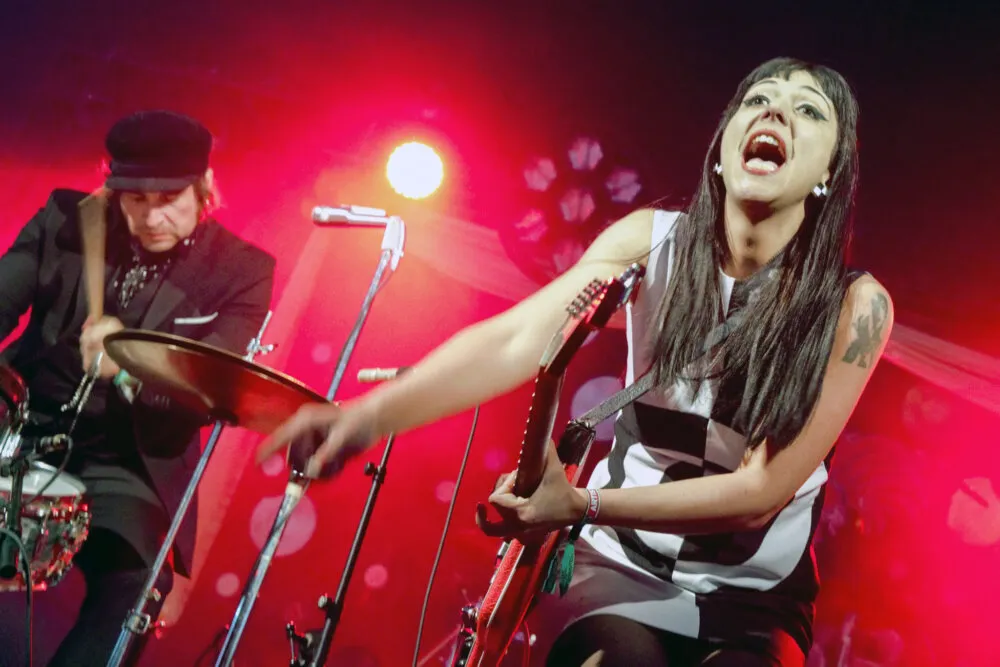
“So ‘Anton’ is a bit of catharsis and I played it live for the first time last night.” She continues,“I’ve always shied away playing it because it’s such a intense song for me, and feels like quite an intense song for an audience, but it was an amazing feeling to play it live, especially because I’ve got, I’ve got two other women in the band. In the crescendo, we are screaming and being on stage with two other women just absolutely going for it with our screaming with a big, big drum build behind us is, I hope, a very empowering thing for an audience as well”
I think music that really appeals to me as well is female voices that don’t necessarily sound lovely.” She explains of the cathartic crescendo. “I’m really into Eastern European female choir singing where there’s these big voices, like on the verge of yelling sometimes. And I think there’s something very kind of spine tingling about female voices in unison, singing very loudly, and not being too worried about being soft.”
Talk turns to the unfair expectations of women in music. “I felt quite anxious about the fact that I was going to be 29 and releasing my first album, because, because of the expectations of mainstream media making out that if you’re past 22 then, as a woman, and a female artist, you’re old.” She confides.
“I think just you’re drilled with this idea that you can’t get too old, and I’ve completely. I’m not worried about that at all now. I think I couldn’t have released Bang before now and Bang is sort of exactly as I need it to be and want it to be, and a total representation of me now. And I think with the years I have under my belt and the years of gigging, I feel quite ready to release my first album in a way that it would have been just a very, very different thing a few years ago.”
‘Dilute’, one of the record’s most striking and surreal centrepieces, anchored by a transfixing intensity, with woozy guitar strums and organs, Zajac’s haunted and tone dives into the disorienting logic of dreams, where anger and empowerment blur into something raw and otherworldly. If ‘Anton’ revealed the bruised honesty of her songwriting, ‘Dilute’ embodies her unrestrained power, a song that transforms fury into liberation.
Title track ‘Bang’ in contrast is a sexually liberated, joyous celebration of Zajac’s discovery of sex beyond the confines of the male gaze, a bold rejection of the slut-shaming culture of her teens, reframed as a reclamation of pleasure.
“A rejection of expectations and the shame that surrounds sex for women, and, yeah, I love introducing that at gigs and seeing the different responses you get to it.” She explains, “But it is mad that we still live in a world where you sometimes feel embarrassed. I think I just suddenly had this epiphany moment where I was like, this actually can be a fun thing for me too. I was just remembering being a teenager and girls being girls, taking against each other and because of these cultural expectations, rather than patting each other on the back and having positive conversations. So ‘Bang’ title track, and the word in itself is a nod to living in Dublin, because that’s a phrase I heard for the first time, or over there, which is, I’ll bang the head off you. Okay, so that’s a little bit of insider knowledge.”
Zajac’s work isn’t all serious it’s imbued with a fair amount of wit, joy and irony too, she is happy we have noticed. “my granddad’s in the hospital right now, and like he is just like, such an inspiration in the way that he’s obviously not feeling great and things aren’t that good, but he’s just able to crack jokes about the most dire situation. Even just being in a hostel and the noises and being able to sit with him and have a laugh about It is, like, well, I can’t complain about anything, no.”