
At the beginning of 1995, Jarvis Cocker addressed fans of Pulp with the words “We are now at the mid-point of the decade, the fulcrum upon which the 90’s balance before tipping over towards the year 2000… I believe that this year will be especially important for all of us. That the events and occurrences of this year will reveal the paths our lives will take for many years to come… Stay alive in ’95.”
By the end of that year, Pulp had released one of the finest anthems of the ‘90s, Common People, with another one following quickly in its wake – Mis-Shapes, headlined Glastonbury to wild applause and in Different Class, delivered a defining album of the decade to wide acclaim. And with “the year 2000” as a theme clearly on Cocker’s mind throughout that time, ended 1995 by releasing the evergreen, classic single ‘Disco 2000.’
Mark Webber, teenage fan turned helper-outer, tour manager, occasional live band “augmenter” and in early ’95, the Pulp ‘fan-club president’; put together issue number 11 of Pulp People with the above Cocker quotes. Mark’s own dreams of being in a successful yet idiosyncratic band had seemingly reached a ceiling in these many bit-part roles for Pulp. But soon after ‘Common People‘ becoming a hit in May ’95 and the group performing at Glastonbury a month later, he was asked to officially join the group as a guitarist (and occasional keys). He was too stunned to give an actual reply…
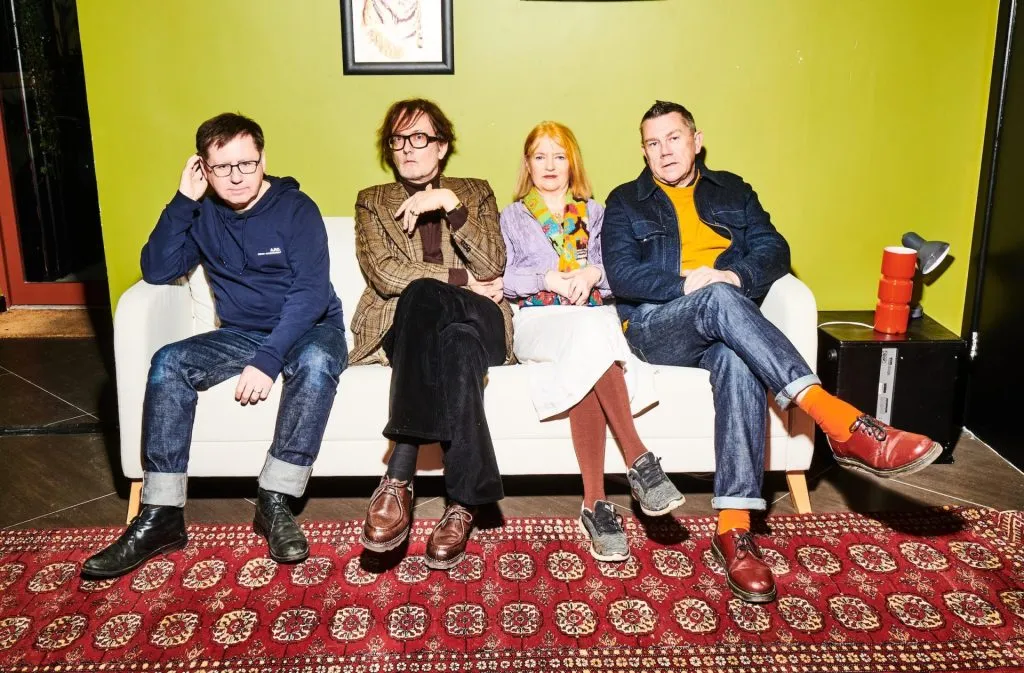
Thirty years on and Pulp have just enjoyed arguably their most successful year since that mid-90s high watermark. More, their first album since 2001’s supposed-swansong We Love Life, was released to much fanfare and huge goodwill. One of Britain’s most interesting pop groups of all time proved they could still come-up with anthems and stompers, the singles ‘Spike Island’ and ‘Got To Have Love’ both garnering plenty of radio play. More – dedicated to their late bassist, the much-loved Steve Mackey, entered the album charts at number one in June and thus followed a summer of packed arena shows and a secret Saturday afternoon slot at the scene of their most famous triumph, Glastonbury’s Pyramid Stage.
Another Mercury Prize nomination followed, their fourth in total (one win, in ’96 for Different Class). The band have ended their busy year with the release of an unexpected cover version of a Johnny Cash song, ‘The Man Comes Around’. We’re glad that Pulp came around again in 2025 and who knows, they might even stick around for a while.
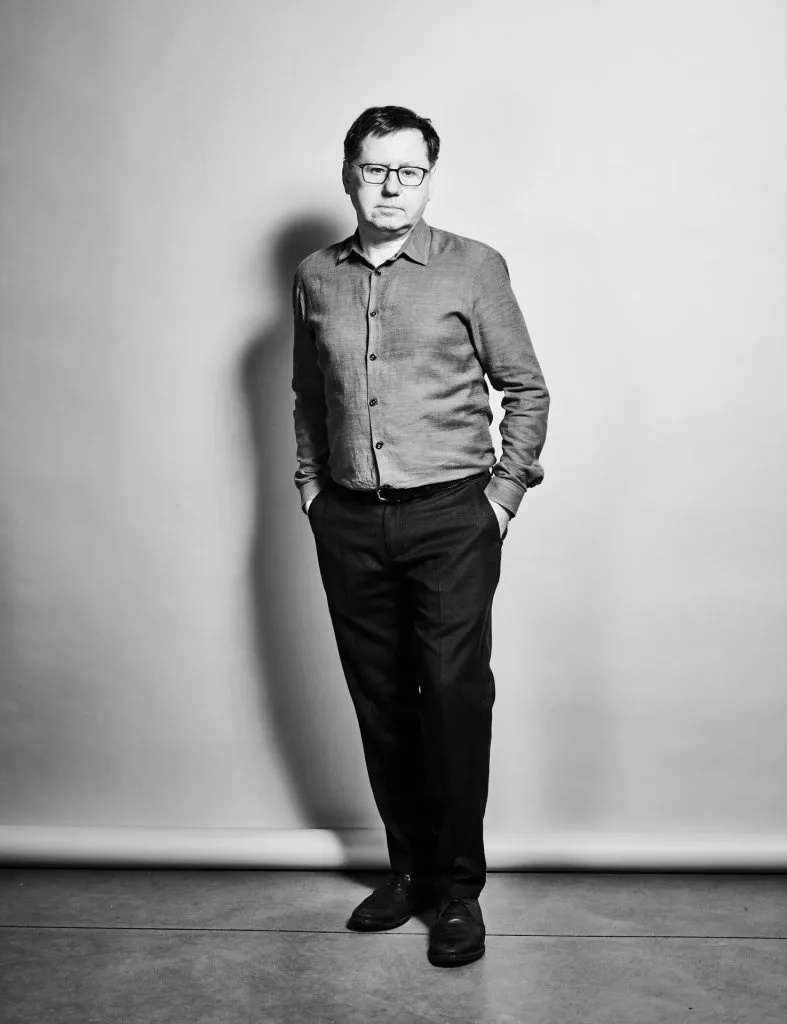
Amidst all this, Mark Webber has released I’m With Pulp. Are You?, a visual history of the group containing a treasure trove of images – flyers, photographs, postcards, press promo packs, and insightful commentary on his involvement with the group from a 15 year old fan in 1985 to a core member of present day Pulp.
Mark generously gave up an afternoon of his time recently to sit down with me and talk through some of the many fascinating aspects of all things Pulp, past, present and future. They not only stayed alive but thrived in ’95. And they’ve just done similar in ’25. Quite a lot to reflect upon….
God Is In The TV (GIITTV): This time last year (Dec ’24) you were recording More. A lot has happened since then. It probably couldn’t have gone much better?
Mark Webber (MW): Not really!
GIITTV: What’s been your highlight of the past 12 months?
MW: The fact that we’ve found that we can make new music again and that it was alright. I like the record – it’s listenable!
GIITTV: Any favourite songs from the album?
MW: ‘Spike Island’ was the first song we tried and James (Ford, producer) made it sound good really quickly, so we could see a way forward. Later it became the first single, and it did well, people understood that we can still do pop music.
‘Slow Jam’ is my favourite track on the record and I thought that should be the second single – “Let’s hit them with something more abstract and show there are different sides to Pulp”. But we released ‘Got To Have Love’ next – which I would have done after the album came out, later in the summer ahead of the US tour.
GIITTV: The lift going into the final chorus and climax of ‘Slow Jam’ is something else – a real highlight of the album.
MW: As we worked on it, I had my amplifier really loud but was playing very gently so that there would be a kind of tension, of it being on the edge of exploding.
GIITTV: Pulp were nominated for a Mercury Prize and performed at the ceremony in October. How did you enjoy that?
MW: I had a book event in Manchester the night before so I wasn’t there for the soundcheck. Then the day of the ceremony was a good reminder of the kind of thing we don’t really have to do anymore: you know, waiting around all day just for a few minutes of activity. That was always a big frustration at any television appearances.
GIITTV: Glastonbury 2025 was something that you were hoping to be asked to do in a regular, announced slot. And you were told that wouldn’t happen (headliners had already been booked etc.). So did the “Secret Guests” suggestion come quite late in the day or were you lying through your teeth for months when denying rumours of Pulp playing?!
MW: Yes (laughs). I don’t remember now when it was but we knew several months in advance. I had no desire to do it because I just don’t have that kind of affection for Glastonbury that some of the other members of the band have, and the public at large have. It’s just a horrific media event nowadays. And the flags! They drive me nuts. When it was suggested that we do the secret thing, I would have said “No” if it had been up to me. Either they want us or they don’t.
GIITTV: Do you get nervous before you go on stage?
MW: I sort of never did, and then towards the end of 2001, 2002 (Pulp’s last tours before they went on ice) I did start to get nervous, which I could never reason. But nowadays not really, it’s just something we do.
GIITTV: I’m seeing you’ve been awarded number one record of the year for More in different publications. Does it seem quite fickle – as if someone, somewhere decides that a tide of goodwill should be deigned upon Pulp during this period of time? Does it feel a little bit odd?
MW: Well, without meaning to sound ungrateful, it doesn’t really mean anything to me. You know, it’s just the opinion of a few people who work for a music magazine or whatever, and I never worry too much about what they write in reviews or anything like that. So, if you’re not bothered about them criticising you, you shouldn’t be bothered about them praising you!
The whole thing around the album being number one in the charts didn’t really mean anything to me either, because, the way the chart is computed is so convoluted now, and the fans are manipulated by the label releasing all those different versions. I don’t agree with that at all.
Just the fact that, anecdotally, people liked it, that’s the main thing for me. We’re never going to make any money from it; that wasn’t the point of the exercise.
GIITTV: Yeah. So, when the latest reunion was announced (in 2022) for shows only (not new material), it felt like a bit of a surprise. Jarvis seemed to be quite happy doing his stuff with his band Jarv Is…
He presumably got a phone call, a nice offer, and he summoned the three other Pulp members – I call you the core four, and now the extended five.
(Members of Jarv Is… now play with Pulp – Andrew McKinney on bass, Emma Smith on violin and guitar, Adam Betts on percussion and Jason Buckle on synthesizer/electronics. Richard Jones has also joined Pulp as string arranger and plays keyboards and violin live).
MW: (laughs) People have different names for it. We’re sometimes referred to as “The Four Principals”!
GIITTV: Very good! So, you met up near Sheffield in the Peak District, and said, “Let’s have a go and see if we can make something”?
MW: Yeah, I guess we just all happened to be up there, in the north at the same time. We met at Jarvis’ house because we thought it would be very discreet, and that no one would know. But the elderly neighbours were having a birthday party on their lawn! And the arrangement of the houses is such that anyone going to next door’s garden, has to walk past the window of Jarvis’ living room (laughs)! So there was a constant stream of old people going by.
GIITTV: Did anyone twig what was happening?
MW: They brought us some cake! But I think they were a bit old for our demographic.
GIITTV: So take us back to 1985, aged 15, when you first encountered Pulp who had already been going for a few years without making much headway…
MW: Where I lived, in Chesterfield (12 miles from Sheffield), there were three record shops in the mid-80’s. One of them was Planet X, the alternative music shop run by two people – one of whom was Henry Normal who later became well-known as a sitcom writer. It was him who played Pulp to me – their new EP at the time, Little Girl With Blue Eyes – he thought I would like it as Pulp were often compared to The Velvet Underground at the time, whom I loved. They both had a violinist and on the one hand had nice ballads but on the other quite abrasive, unpleasant music. And he was right!
I went to see them play shortly afterwards, and interviewed all of them except Jarvis for my fanzine, Cosmic Pig. It was shortly after Jarvis had fallen out of a window while trying to impress a girl. He hurt himself badly and had been in hospital for a while when they thought he might not walk again.
When Pulp started doing concerts again, he was performing from a wheelchair which looked more like a Victorian bath-chair!
He was wheeled onto the stage, performed the show, playing the guitar and banging on the arms of the wheelchair during impassioned moments. Then at the end of the concert he just stood-up and walked off the stage!
GIITTV: What were your early impressions of spending time with Pulp around this time?
MW: When I met Pulp, they just looked so odd. Candida was so small, like a doll in multicoloured clothes. Magnus, her brother and the drummer, looked a bit like Andy Pandy – a shaved head on top but with frilly hair coming out at the sides. He had a very unusual but brilliant way of playing the drums. Pete, the bass player, looked like a football hooligan and Russell on violin, who became known for having a stare like Ron Mael from Sparks while also looking a bit like David Byrne from Talking Heads.
After first seeing them, I organised their next concert in Chesterfield and my teenage band Siegfried’s Magick Box played support. Russell was the main person in the group I had interactions with at the time, I didn’t get to really know Jarvis ‘til later.
Pulp always tried to put on a show with a tiny budget. Just before my association with them they would drape the stage with toilet-rolls and also used a lot of tin-foil, cling film… just to try and create an interesting visual. There would also be those bags that you used to get goldfish in at a fair – they would fill those with water and food-colouring (no fish) and suspend with string across the stage, above all the temperamental electrical equipment!
When me and my friends got involved, from around 1987, we would do things like project Super 8 films at the shows, or slides with psychedelic patterns. We were big fans of Andy Warhol as well as the Velvets, and this was our attempt at the Exploding Plastic Inevitable (Warhol’s multimedia performance from 1966/’67).
GIITTV: You became quite adept at meeting your musical heroes during the late 80s after starting to hang-out with Pulp. A few years later you interviewed Mo Tucker and Sterling Morrison from The Velvet Underground. And you also became a teenage-assistant to Spaceman 3 too?
MW: (laughs) Well, I had read about their first album (Sound of Confusion) so I bought it and loved it. There was an address on the back of the sleeve, so I wrote to them. I think I basically said, “Are you going to be playing any shows near Chesterfield?” i.e. Sheffield, I guess, or Derby. And Sonic Boom (Peter Kember of Spacemen 3) wrote back, “No. We’re not. We’ve got no shows planned at the moment.” And so I just thought “Well, alright. I’ll organise one!”
So I put together a concert at a place called The Lagoon Bar, which was the bar of a small hotel. Maybe 30/35 people came. Actually, a recording of it is on YouTube. I guess most of my involvement with Spaceman 3 was probably when Pulp were not very active – 1987/88.
But those two bands (Spacemen 3 and Pulp) were my two loves of modern music.

GIITTV: I wanted to ask you about your book I’m With Pulp. Are You? which had a hardback release towards the end of last year and is now out on paperback. It was originally just going to contain images – is that right?
MW: Well, the original proposal from the publisher, who I knew through some mutual friends, was that he was thinking of doing a book about Different Class, which I think he was planning on commissioning different people to write essays. And that didn’t sound very interesting.
And it coincided with me going through all my old boxes of Pulp stuff. And so I sent him some photos of the things I’d found and said, “This seems more interesting”. And he was into it.
It wasn’t meant to be only images. What I imagined it would be is that I’d have to write an introduction and a few extended captions to explain what particular items were or something like that. But then I put off the writing as long as possible, and then when I started to do it, I wrote a lot more than anticipated.
GIITTV: Because your story is so unique, how many examples are there, of someone who joins a band by… stealth?!
MW: (laughs) Well, it seems there’s a few. I keep hearing about different people but don’t ask me who they are right now. I mean, apart from Richard Oakes and Suede, which is slightly different – but he was a fan, and he ended up in the band.
GIITTV: Yeah, but he didn’t have to help dress-up the live stage, set-up a fan club or take the money after gigs and tour-manage like you did!
MW: Well, I didn’t have to, I just wanted to (laughs)! When I started to work on the book, I thought the group was finished. It was a couple of years before any talk of us getting back together. So, I thought it was a finite story, that it was all over and I could speak freely (laughs)!
GIITTV: In the book I think it’s interesting that, fast-forward a decade or so from first encountering the group to the late 90’s after Pulp have “made it” and just after the This Is Hardcore tour, you seem disillusioned and you get in touch with Cat Power, travelling with her and her band on the Dutch leg of their European tour.
Was there a sense of “This is the bit I like about being involved in music” – the kind of camaraderie that you had experienced all those years before?
MW: Well, that was what I discovered. When we played concerts at that point, it all became so loud and messy and indulgent. Obviously, we had an active career at the time, so there was a lot of business stuff to deal with too, but we were all a bit burnt out by the end of the tour for This Is Hardcore.
At some point I bought the Cat Power album Moon Pix. I remember listening to it, when we were in Australia on that tour. The first time I saw her play was a concert in Nottingham, just a room above a pub. Then I asked someone if I could DJ at a concert her band played at The Garage in Highbury.
They were going off on tour to Europe straight after that, and I asked someone at her label, would they mind if I just (laughs) went along and joined them. And now, I can’t imagine, how I would have dared do that! And why on earth they’d agree! There were three of them in the band at the time, plus a tour manager/driver/merchandise guy. So there was four of them, and me, all travelling through Europe in a transit van.
GIITTV: I think the part of the book that I enjoyed the most was, the ‘91 to ‘93 period, you got some amazing photographs of that time. There was finally a bit of momentum with Pulp. You spoke about a gig that they played in Halifax that you and Nick Banks (Pulp drummer) both feel was an important step.
MW: (laughs) It was wild. It was in a room in a leisure centre, not a very big room. I guess at that time, Pulp were probably doing concerts where you’d expect between a hundred and fifty people in those places, and there were probably a hundred or something there but they were mostly teenagers, or they seemed to be. They were very young, as if it was a youth club or something! And they started off being really rowdy and aggressive, heckling and stuff – calling Jarvis a “poof” and things like that. But then, at some point, they just got really into it.
This was before I was playing with the band so I was watching it, rather than participating. It was amazing to see how the room changed. The kids pushed the PA over, a table got smashed – it was really tempestuous.
GIITTV: But then, a year later, they’re playing Newcastle Polytechnic, and there’s great photos in your book where Jarvis has half the room to just circle around and throw shapes. So Pulp’s ascent was still quite incremental, outside of Sheffield, at that stage, wasn’t it? At certain times, it went down better than others?
MW: It would be like that sometimes, yeah. That one was quite sparsely attended. But it was also a very big room, and the audience were congregated around the back. So there was a huge dance floor with no one on it (laughs)! So Jarvis just had a little run around – that’s how I remember it!
GIITTV: Over the next couple of years, you went from tour-managing and running the fan-club to being more actively playing live with the band on guitars and some keyboards.
MW: Yes, they’d be teaching me parts that they wanted me to help out with when playing live because Jarvis wanted to focus on singing and performing.
I guess the first sign that they regarded me as one of them was asking me to be on Top of the Pops for the performance of ‘Babies’ (June 1994). I had nothing to do with that song or the recording and Top of the Pops was mimed so there wasn’t really any reason for me to be involved. If they had a photo session or an interview or something like that back then, I’d just keep out of it.
But by the latter part of’ 94 into ‘95 I started getting a bit frustrated as to where I fitted in, especially when I was starting to contribute to the writing.
GIITTV: Things started to happen quickly after Pulp’s breakthrough in 1994 with the His ’n’ Hers album. You played guitar on the live debut of ‘Common People’ at Reading Festival that year. The song was then recorded for a John Peel Session and in the same month, September ’94, you joined the band on tour in the US supporting Blur.
MW: It’s surprising that looking back now to see that first time meeting Blur, when we did Pulp’s first concerts outside of the UK, in France in October ’91, through to supporting them in ’94. It’s actually quite a long period of time, but in my head, it feels like the next year or something.
We got on well with them. But by 1994 they were really successful, so they were a little bit in another world.
GIITTV: So you came back from America and randomly appeared at the Pulp Fiction premiere.
MW: Well, it’s not that random – it’s not a great leap for someone to make that connection (laughs)!
GIITTV: Because you share the word “Pulp”! You played a cover at that, right?
MW: We did ‘Girl, You’ll Be A Woman Soon’. We played a short set at the Ministry of Sound night club. What I remember about that night is standing at the bar and having a conversation with Shane McGowan but I have no idea what we were talking about!
GIITTV: And that was soon followed by writing and recording the songs for Different Class. What are your memories of that?
MW: Jarvis, Steve (Mackey) and Rough Trade discussed a few different possible producers. I know they spoke to Trevor Horn. Jarvis has said recently that they spoke to the KLF! But they settled on Chris Thomas.
GIITTV: You still weren‘t officially a member yet. In the book, you describe the day of shooting the video for ‘Common People’, and you feel that you’re left as a spare part, or being instructed that “You can be in the video if you do something silly like…”
MW: Ride a chopper bike!
GIITTV: But ‘Common People’ is a hit, and it’s around then, before recording the rest of Different Class that you’re asked to become a proper member and make Pulp a six-piece.
I was thinking earlier today, actually, of ‘Something Changed’. The actual sentiment of the song kind of fits you really well, because you were asked to join the group – and you wrote a key part of that song. But, you know, your life could have been…
MW: “…very different…!”
GIITTV: I didn’t want to say it! You didn’t have any notions of another career?
MW: Not at that point. Back in ’89 to ‘91, I was writing songs and recording demos at home and sent a few tapes out to different labels.
I had an idea for a record I wanted to make. But after that, I was so occupied with Pulp that I just kind of stopped thinking about that.
GIITTV: You’ve said that after Pulp split at the end of 2002 you were fed-up of music and tended to avoid it, listening primarily to talk-radio in the years afterwards. Do we have your daughter to thank for your renewed interest in music in the last few years?
MW: Partly. I guess my awareness of good, new pop music was her doing. I’d already discovered Big Thief and some other contemporary singer/songwriters in guitar music.
GIITTV: Yeah, I wanted to ask you about the songwriter workshop you did with Adrianne (Lenker). How did you find that?
MW: I did two, both Adrianne and Buck Meek (both members of Big Thief) did them. Adrianne’s was the first, and it was amazing. I didn’t do it because I wanted to learn to write songs, I did it for the insight into their song-writing practice because I love their records so much.
She was just so sincere and humble and open. This was done over Zoom, so at the end of each session you would see the other participants asking her questions. It was all so intense and emotional that by the end of the last session, everyone was crying!
GIITTV: Oh, wow.
MW: (laughs) It had been such a moving experience.
GIITTV: Were you crying?
MW: I don’t think I was at that point …
GIITTV: Ah, Mark, come on…
MW: I cry at many things. I’m not sure I was crying on that occasion, but I cry watching documentaries about Live Aid.
GIITTV: Do you?
MW: Yes, and I cried watching the recent BBC documentary about Bruce Springsteen when they talked about him giving £10,000 to the Miners’ Wives in Newcastle.
GIITTV: Oh, I didn’t know that. Fair play.
So what can you tell us about 2026 for Pulp. A tour of Australia & New Zealand has been announced for the Spring, might we see more UK shows or hear more new music?
MW: There’ll be some shows but not many. We haven’t worked on any new songs or anything like that.
GIITTV: Would you like to?
MW: Not sure… maybe by February!
*
Since speaking to Mark, Pulp have been announced as one of the headliners for the End of The Road Festival 2026 and will also play their own outdoor concert in Wythenshawe Park, Manchester next August with support from Self Esteem.
Mark’s book I’m With Pulp. Are You? is available on paperback at all good bookshops or direct from https://www.hatandbeard.co.uk/products/im-with-pulp-are-you-soft-cover
Pulp’s record More is out now and so too is the 30th anniversary edition of Different Class.