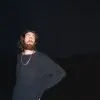
Letting things take their course, flow naturally and to not disturb the nature of fate and fortuitous occurrences. This is how Rio Kosta approach their psychedelic funk music. It is set of principles that they have named the Creative Bible and with it the Los Angeles duo of Mike Del Rio and Kosta Galanopoulos bring childlike imagination, genre-blending and a rhythmic breeze caused by their harmonic falsettos and dance-provoking grooves. Recorded at Del Rio’s own home studio named Hotel Havana, a location that is drenched in Los Angeles history because it used to be owned by 50s singer Dick Caruso as he entertained famous guests, this nostalgia when paired with the heritage of the two friends (Greek, Italian and Puerto Rican) creates a debut album in Unicorn that is constantly absorbing and doesn’t take place in one location or one time. Yet the ethos of conceding control as life’s rhythm and ideas electrifies your being connects the genres together.
Rio Kosta adopt a dreamy retro sound that is associated with Jungle ( ‘One With You’, ‘Intermission’, ‘My Dreams’, ‘The Wheel’ and ‘It’s Starting’) as well as a distortion of voices and a drum motion that is a kin to Tame Impala’s ‘Let It Happen’ (‘Mountain Top’). The familiarity of these sounds will bring in listeners who have a preference for soul and psychedelic music but its when Unicorn embraces an exotic vibe that its magic is most at force.
‘Follow The River’ most obviously ticks the Creative Bible’s goals; promoting rhythm (“Raise the vibration”), letting nature guide you through life (“And become as one in a universal flow”/ Hands of creation. Open the doorway”) as well as singing in a language from their family; this time from Mike Del Rio’s Spanish in the phrases “Bueno y Malo (Good and bad)”, “Viva el Loco (Long live the crazy one)” and “Hasta Luego (See you later)”. This is one of two tracks on Unicorn to create a dub fusion. In ‘Follow The River’, it blends a dub style of singing with Filipino-style tin percussion and funk wah pedal. While ‘Save My Soul’ wonderfully imagines dub being performed by the raspy Paolo Nutini inside a healing church. The gospel vision heightened by the ecclesiastical organ and lyrics such as: “When it happens. And its physical, spiritual. Can’t explain But I don’t know. Another way To survive myself. Nothing, no-one else. Could save my soul.”
‘The Wheel’ is half in Spanish, however when the rhythms turn from flamenco to calypso we are giving a visual hallucination of an English-speaking traveller suddenly being able to speak Español, possibly due to being overwhelmed by his psychedelic possibly magic-mushroom induced surroundings: “Fate’s coming in a full moon rise. Speaking in a tongue that I can’t describe. In all the ways that I’m wild and when. I’m feeling like a child again.” The protagonist embraces the principle of an unexpected change but also like ‘Follow The River’ he promotes dancing as the beginning of freedom thinking. Despite its title, ‘Volar Lejos (Like A Feather)’ only has the repetition of the title as its foreign language input but the bossa nova percussion and echoey atmosphere imagine an exotic community nonetheless. As well as being another commentary on letting fate flow, it also emphasizes with aging partygoers trying to relive but ultimately aware that time has moved on and these experiences are becoming just distant memores: “Solo in the sun and slowly dancing off the page. Holding on a classic summer. People, places, pretty faces seem so far away. And everyone ain’t feeling younger.”
‘Ancients’ creates a mystical desert-dwelling dream. Swapping Mike Del Rio’s Spanish influence for Kosta Galanopoulos’s Greece. Kosta’s father was in a Greek band in the ‘70s and Rio Kosta took a sample from that and it became the basis for a track that highlights Rio Kosta’s time-hopping soundscapes. The song’s character is confused by time, as he experiences Déjà vu, nostalgia and future-facing thoughts. “I’ve got a feeling I’ve been here before / Feel like I’ve come back, but I’ve never been home”. The vocal production on here is so effective at taking the listener to an otherworldly realm.
The title track ‘Unicorn’ and ‘Mountain Top’ use their production experience to highlight embracing fortuitous occurrences. The former – which features whistling that recalls Molly Lewis – keeps the original first session recording as the band didn’t want to change its natural exuberance. While ‘Mountain Top’ notes about how initial struggles to get this song right ending up turning into an interesting recycling experiment, as they took parts of the failed versions and added to the other songs. Hence “Gotta find another way. To get back to the Mountain Top”.
By the end of the record you will have to remind yourself that all these songs are off the same album, such as the eclecticism of the genres and voice style changes. However, there is a spiritual zen-like thread that runs through Rio Kosta’s debut Unicorn that promotes the idea of not over thinking things, so stylistic alterations makes sense when you let your mind go with the flow.