
In the hearts and minds of Lifeguard, it will always be New York ‘77. Or so it seemed, speaking to Lifeguard after their revelatory gig at the Lexington in London, where their explosive live set went to the extremes of what three teenagers can achieve with a distortion pedal and zero bass guitar. Originating from Chicago (or ‘Chi-raq‘ as lead singer Kai Slater refers to it) in 2019, the art punk power trio has an average age of only eighteen and, as of last Friday, one album under their belts. Ripped and Torn is an apt title for the project, powered by industrial, spitfire drums, nervy, primal guitar thrashing reminiscent of Gang of Four, and protopunk vocals defined by hooky simplicity. The result is a flashbang of electrics, a record that revels in hitting the listener with quick-loading impact.
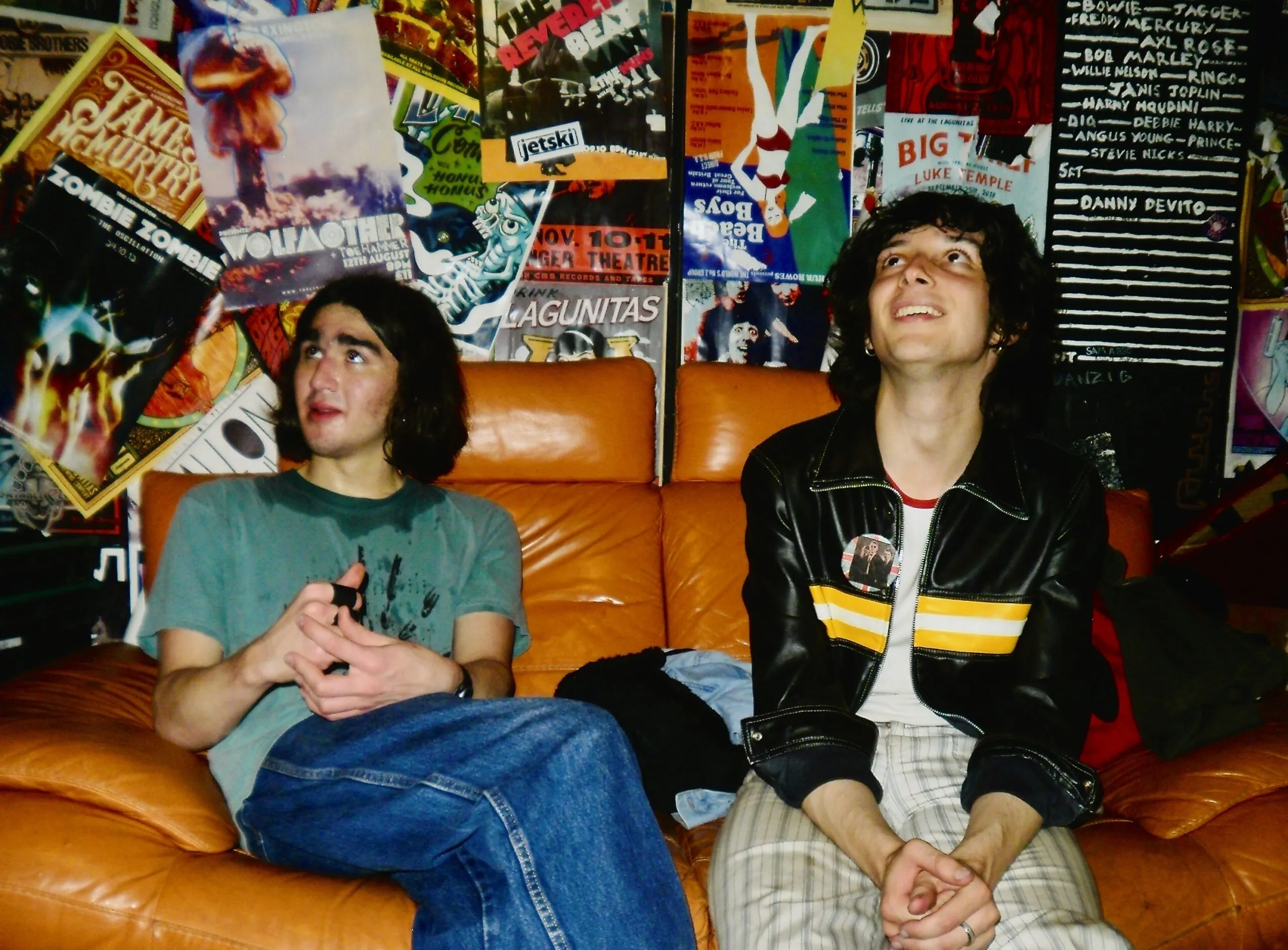
Leaving the stage without fanfare, the band were cunningly intercepted by us before their tour manager could guide them towards the merch table. Alas, Lifeguard are prioritising the need to talk about The Jam, who feature on Kai’s button, prominently placed on his Hedi-Slimane-skinny leather jacket. He talks like his music sounds, with an erratic, emphatic pace: ‘It’s crazy. Literally nobody knows the Jam back in the US. Paul Weller is just a genius to me‘. His point was underlined by the band’s mind-blowing cover of ‘In The City’ during their live set, which captured the youth, urgency and raw feeling of the original. It was a version that could have rivalled the Jam in their prime. One crowd member took the opportunity to curse out The Molotovs (who are for the Jam what Oasis are to The Beatles: all of the literal musical descriptors, none of the vision). Kai, however, is more sympathetic: ‘The Molotovs are rip-offs for sure – but they’re also just part of the mod thing. Can’t criticise them for being mods.’
As a noisy, artsy three-piece, the group have long withstood comparisons to Horsegirl, which is unsurprising given that they are signed to the same label, have historically shared members, and are related by blood – drummer Isaac is brother to Horsegirl guitarist Penelope Lowenstein. The high-achieving siblings underwent parallel musical journeys, with Isaac commenting that ‘both of our paths of music discovery came from bouncing off one another. Obviously, she was three years ahead of me, but she and I have always been listening to records together.”‘ For Lifeguard, it is a family affair – and they have been getting it percolating. The combined effect of Lifeguard and Horsegirl has led to some talking of a cohesive “Chicago scene”. Guitarist and erstwhile bassist Asher explains: ‘I wouldn’t say there’s a whole thing out there right now. Loosely, maybe – we have friends, and we all go to each other’s gigs [and some of them are related]. But there’s not really any other noisy post-punk happening. Everybody’s got a different interest‘. If the Chicago scene is ‘about‘ anything, he elaborates, “’t’s all of us elevating each other. Its mutual.‘
The late-70s Patti Smith cultural maelstrom that grounds the band’s sound goes deeper than music – deep enough to affect their tailoring. This is especially the case with Asher, whose billowing ‘fro recalls Billy Ficca of Television, his tie so skinny it would make Cheap Trick deathly jealous. Asher is prepared for this line of questioning, immediately volunteering ‘my fashion idol is Robert Mapplethorpe.‘ Isaac, sitting to his right, gives a solemn nod of approval at the invocation.
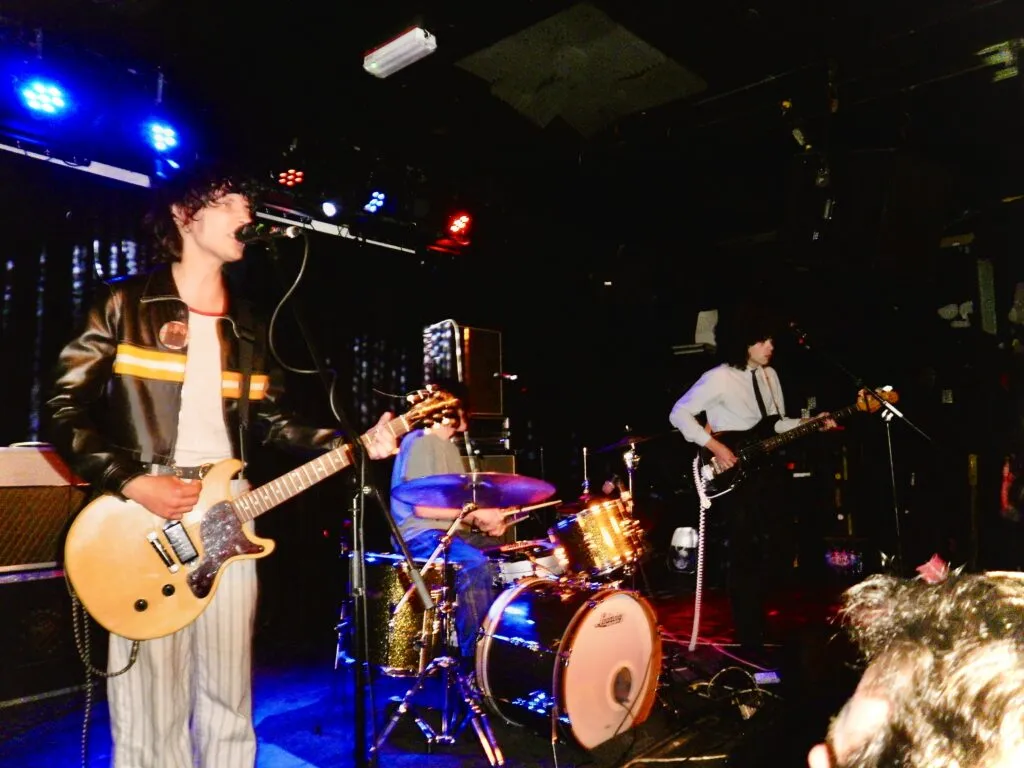

The stripped-down, clean and primitive approach of the era is heavily reflected in the band’s use of guitars, which extends to a total lack of guitar pedals. Similarly to The Birthday Party before them, they believe that the most impactful tone comes from style and distortion over artificial noise. So much so that Kai somehow broke the centimetre-thick G-string halfway through the setlist. ‘It’s an epidemic… like globally. And it’s because of fucking China‘ pushing their wares on unwitting guitarists [I assume]. Excessive tattoos are analogous to excessive peddling, Kai proselytises: “’f you have a lot of tattoos, not every one can be meaningful. It doesn’t make you cool”‘ The gradual shedding of accessories has been part of the band’s evolution. “I’ve had a few pedals too”, Asher confesses. ‘We’ve done more affected things in the past – but it’s just not for me.’
As keen as they were to talk about the Jam, they also leapt at the opportunity to discuss their biggest album-release-day-rival, another debuting star by the name of Addison Rae. ‘It’s so good,’ Isaac advocates. ‘We’ve been talking about it non-stop. And the producers are two basically unknowns – it’s not like there’s some big pop guy, like Max Martin, doing everything behind the scenes. It’s a cool-ass production.‘ Kai is more sceptical: ‘I don’t believe the hype yet. We’re not competing with her. We’re authentic. We’re not from TikTok.‘ As an American talking to a Brit, Kai reversed the roles and confused me with his droll sarcasm. Clearly his sense of humour is as inspired by Albion as his singing voice.
When it comes to working on their debut, most bands take the easy way out – recording the tracks they have been performing for years, perfectly honed and focus-grouped by live audiences. Lifeguard wanted to emphasise (as their last words after the tour manager pointed out that they were actively haemorrhaging merch sales by sitting and talking to us) that they wrote all 12 songs on the track list in no more than four weeks. ‘It was custom made,’ Asher beams. The album feels like a personalised gift to the band’s fans, myself included. In an age of wall-of-sound indie rock, where bands with seven members and double the number of instruments throw anything at the wall to arouse emotion, the greatest weapon in Lifeguard’s arsenal is their use of space and simplicity. Lifeguard drag the listener kicking and screaming back to an earlier era of late ‘70s ennui in the process.
Ripped and Torn is out now on Matador Records.
Photo credit: Will Walters