
When: 14th and 15th June 2025
Where: B.E.C. Arena, Manchester, England
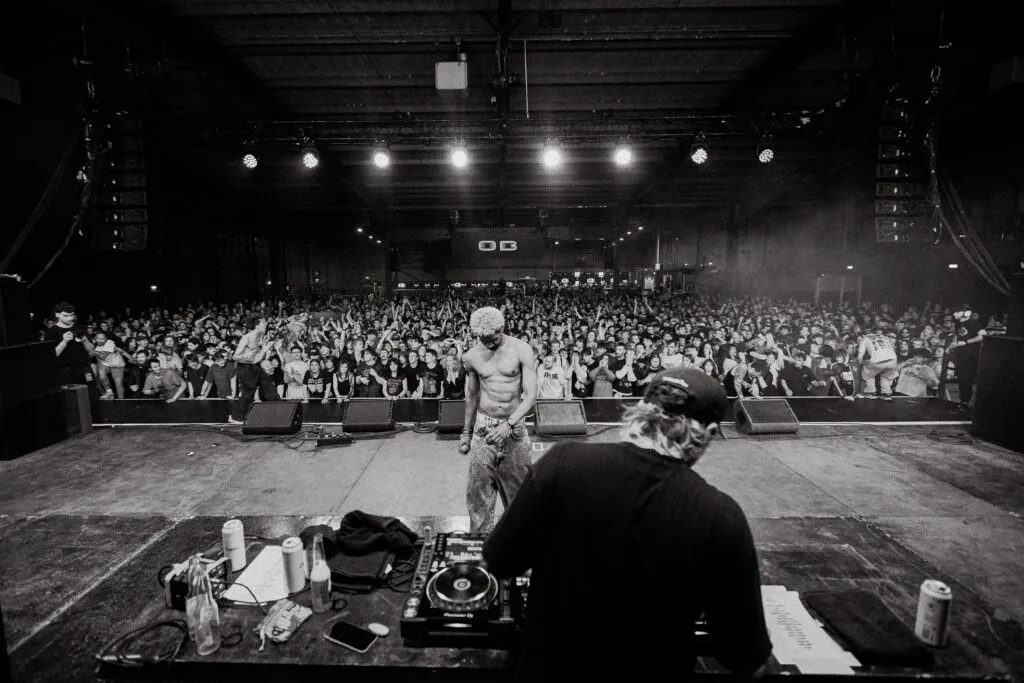
Outbreak has always thrived in a kind of beautifully feral disarray. Born in Leeds as a DIY all-dayer and bought for a then-eye-watering £20,000 (a figure that now seems quaint for a festival worth millions), the festival now sprawls across Manchester’s BEC arena like a staged descent into controlled chaos. You don’t come to Outbreak for comfort, you come for rupture. Most notably, there’s no barrier between the stage and the crowd. No photo pits. No buffer zone. You don’t watch Outbreak from a safe distance; you get swallowed by it. And this year, it doubled down on what it does best: curated lawlessness. Two days of heavy hardcore, shoegaze stage-dives, gothy invocations, glitch meltdowns, and knuckle-dragging breakdowns, all stitched together by the shared religion of catharsis.
Saturday
Saturday kicks off with Brooklyn-based band Momma, whose fuzzy, grunge-pop anthems manage to cut through even from outside the venue. I’m still queuing to get in as their set begins, but their infectious hooks and sun-dazed melodies float out the confines of the arena, making the wait feel a little less painful. Even at a distance, they sound tight, tuneful, and totally dialled in.
Sprinkles of rain begin to clear up by the time Militarie Gun take to the main stage, offering up a steady run of stomp-along alt-punk with just enough bite to stir the early risers. It was a perfectly serviceable set, much like a sturdy breakfast. Energetic, melodic, maybe a little too clean to bruise.
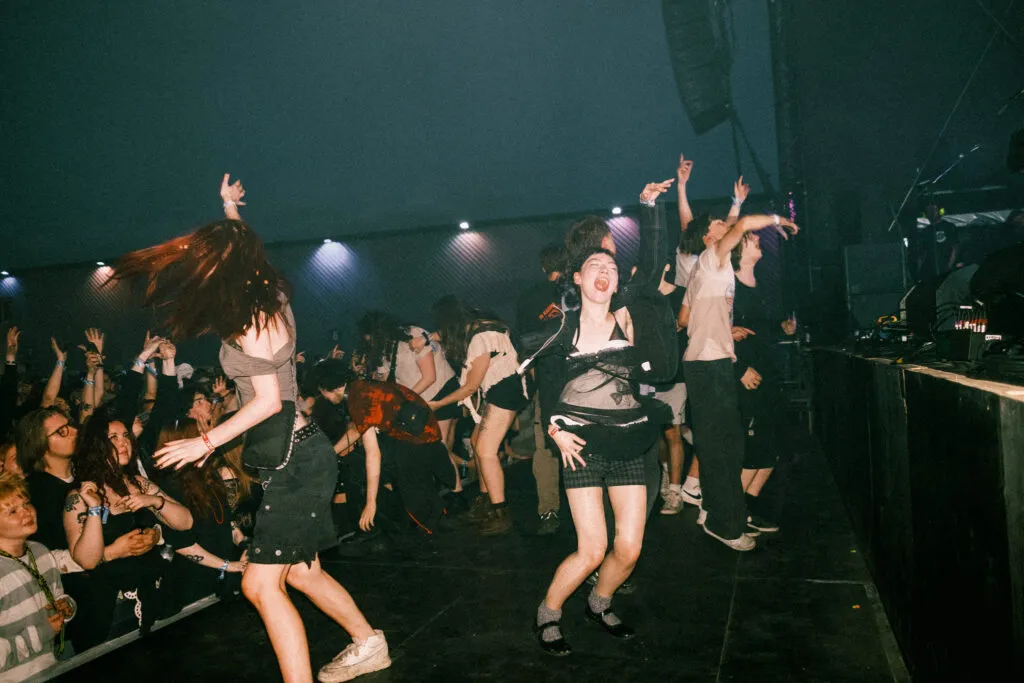
Things get strange fast, though, thanks to Jane Remover. Flailing, glitching, and twisting through a set that was part hyperpop, part club collapse, and entirely unstable, the vocalist channels a kind of euphoric digital meltdown. A constant stream of people hurtle across the stage like they were trying to outrun the breakbeats. The vibe sits somewhere between 100 Gecs and an illegal warehouse rave curated by Tumblr kids in 2014, everyone revelling in the glorious chaos. It’s messy, distorted, and weirdly moving.
Julie bring a needed reprieve without sacrificing the momentum. The LA trio nail their blend of slacker-rock, grungy shoegaze, and ultra-catchy melodies. They run through nine songs, combining older favourites with cuts from last year’s record, toying with pop perfection without ever making it easy. Their songs tease comfort, then swerve left into fuzz or feedback, like a mixtape designed to break your heart at 3 a.m. but still get you to class in the morning. No one else all weekend hits “bittersweet” with this much control.
Model/Actriz don’t do bittersweet. They do confrontation. Vocalist, Cole Haden, equipped with bondage straps and a Freddie Mercury moustache, sneers and croons into the crowd, leading a whiplash set of high-fashion no-wave noise. Vocally, a little out of tune at times. The outfit are defiantly off-kilter. Their music doesn’t ask for approval, just attention, it is performance as provocation.
Then comes a dose of genuine reverence. Sunny Day Real Estate turn the clock back with the kind of set that make grown men misty-eyed. I first discovered them in the early 2000s, deep in a 90’s emo rabbit hole that started with Cap’n Jazz and the Kinsella orbit. It’s still a quiet thrill to see younger crowds now embracing that same lineage. Running through 11 songs including their two “hits”, they bring a cathartic exhale from some of the previous electronic chaos. You can still hear the seething vehemence as Enigk’s sings the chorus to ‘Pillars’, “Don’t tell me you’ve gone astray, I walk in circles, I’ve seen a million things that tell me so”, along with the rest of the audience. ‘In Circles’ is second to last and Enigk’s voice is still a weapon, softer now, maybe, but sharp where it counts.
Have A Nice Life (HANL) followed with their own haunted sermon: imagine Henry Rollins but goth, if he had discovered music and poetry at the same time, shouting into the abyss while the world quietly falls apart behind him. They rarely ever play gigs and you can tell it’s emotional for both the band and the audience. A hundred plus kids all shouting “arrowheads” 68 times as they play ‘Bloodhail‘; people having the chance to finally lose themselves to ‘Defenestration Song‘ outside the confines of their bedrooms.
Towards the end of the set, the band take a much needed break as they play ‘A Quick One Before the Eternal Worm Devours Connecticut‘. Vocalist Dan Barrett sits on the stage puts his head in his hands, eventually staring intensely into the audience, something that reoccurs a number of times throughout the set when standing too. In the final song of the set, ‘Earthmover‘, everyone crowds the stage whilst he lies down behind the wall of bodies. They may not play often but maybe that’s the point; it just wouldn’t mean as much to anyone if they did. Tonight’s performance is the most powerful set that takes place at the festival, possibly that I’ve ever seen.
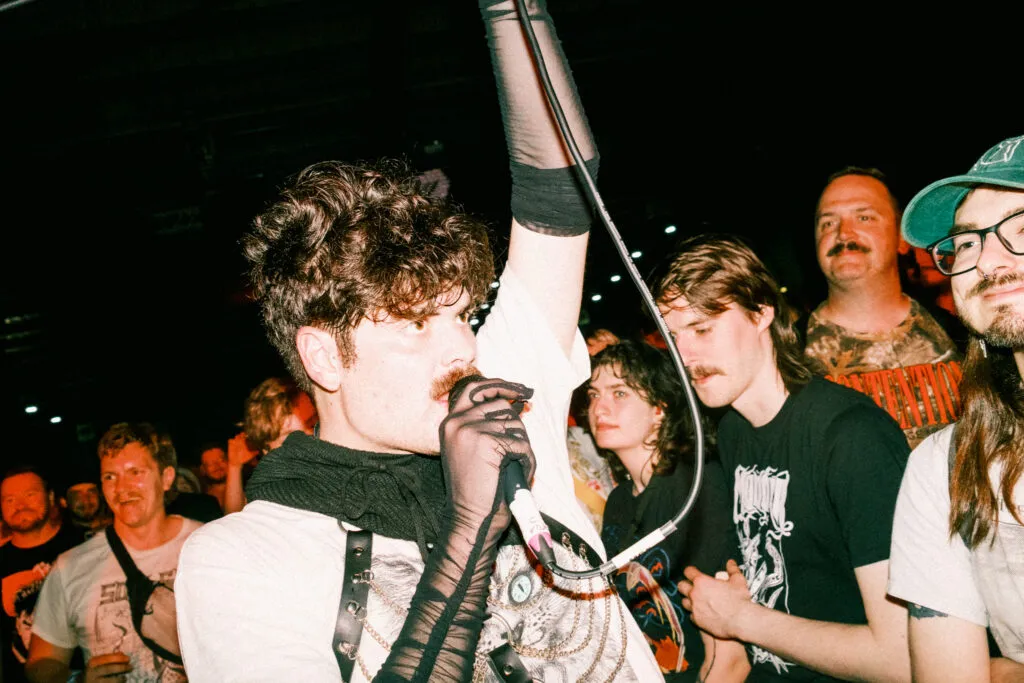
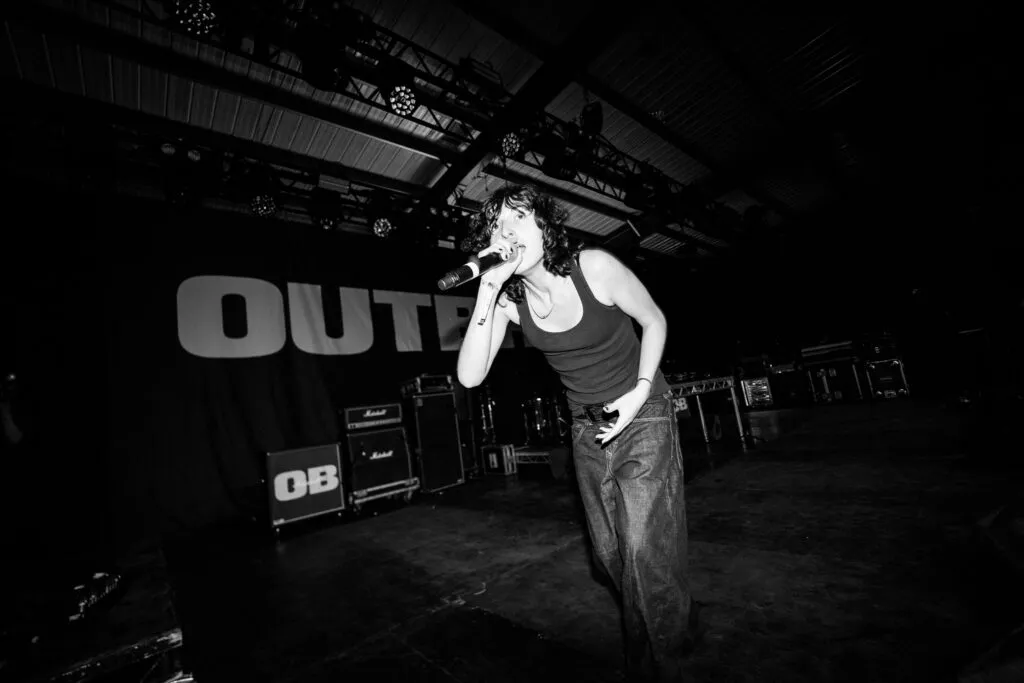
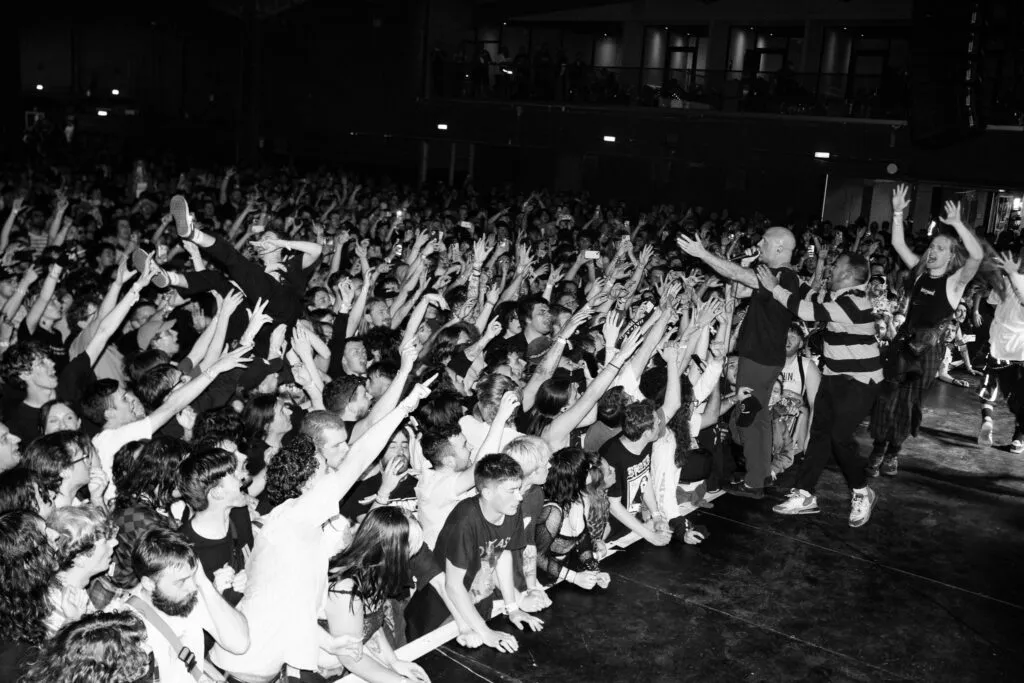
From top left: Model/Actriz (Eddy Maynard), Jane Remover (Elliot Ingham), Sunny Day Real Estate (Jamie Carmichel), Have a Nice Life (Elliot Ingham).
Switching gears from chaos to calm, Slowdive glide onstage like a deep breath after a panic attack. Stagediving to dream pop should not work, and yet, here we are, floating through glacial textures while human bodies hurl themselves across the stage. The band, ever unbothered, play through the chaos like elegant ghosts. “I think you need to go off the stage now and then you can come back up,” Rachel Goswell politely suggests of the audience as they linger and bob like orbs.
Like Sunny Day Real Estate, Slowdive seem to be experiencing a revival spurred largely by Gen Z’s ongoing mission to rescue overlooked 90’s gems. A generation raised on YouTube algorithms and vinyl reissues has a remarkable knack for shining a light on songs that never got their full dues the first time around, and this time, it’s ‘When the Sun Hits‘ that’s found new life. That track in particular feels like the gravitational centre of the set, pulling the crowd into a hazy, slow-motion rapture. There’s so much soft-blown crowdsurfing it almost turns into a dream ballet. Sounding even better live than on record, Neil Halstead’s vocals have roughened into something grunge-worn and Cobain-like, adding new texture to that gauzy, glimmering atmosphere.
Sadly, that momentum doesn’t hold (die-hard Glassjaw fans might want to skip ahead). There’s a thin line between cool detachment and just not giving a shit and during Glassjaw’s set, it’s hard to tell which side they’re on. A legacy act, held dear by some, they walk on stage like they’ve already done us a favour by showing up. Daryl Palumbo strolls across the platform, half-singing in that signature soaring tone but when you’re only playing at 10%, even the most beloved songs start to feel like a soundcheck. Plenty of fans are mouthing along, maybe grateful just to witness it at all. But after all the blood, sweat and unhinged catharsis, this feel like a band playing through the motions: reverent, maybe, but dialled so far back that it barely registers.
Alex G closes out the Saturday main stage like a strange, sideways bedtime story. Things begin warm and jangly (scrappy indie chords, woozy harmonies) but soon drift into more fractured, experimental terrain. His cryptic lyrics spill out like private thoughts overheard, sometimes delicate, sometimes deranged. It’s a set of sonic curveballs and whispered anti-anthems.
Some of the intricacies get a little lost in the vastness of the main outdoor stage because these are songs that were born in bedrooms, not arenas, and you can feel the tension between scale and intimacy. He does his best to stretch things wide, bringing in a tight backing band and beefing up the arrangements, but part of his charm is in the lo-fi weirdness, the delicate stuff that doesn’t scream. You get the sense he knows this. Still, the audience is here for it in all their good-humoured frolicking.
Just when the night seemed to be winding down, Danny Brown tears through the indoor stage like he’d been storing up chaos all day. Crop top on, voice in full shriek-mode, he stalks the stage with the energy of someone on their fifth Red Bull and last nerve. His set flips between scattershot weirdness and moments of pure command — twitchy, fast-paced, borderline psychedelic. The room feels like it might split in half when Jane Remover reappears for a run through of their collab ‘Psychoboost,’ now remixed into something even more manic and combustible. From there, it’s all scorched earth: a mini-set of JPEGMAFIA collabs (‘Garbage Pale Kids‘ was especially vicious), the jagged brilliance of ‘Ain’t It Funny’, and a closing trio of ‘Grown Up‘, ‘Attak,’ and ‘Side B (Dope Song)‘ that reminds everyone just how long Brown has been living on the line between genius and total meltdown.


From top left: Slowdive (Nat Wood), audience at Alex G (Eddy Maynard), Danny Brown (Jamie Carmichel).
Sunday
Sunday wasted no time getting feral. Pest Control’s set is blistering, British, and brutal — feeling a bit like a Discharge demo, duct-taped to a runaway train. Proudly flying the flag for UK hardcore, the band make their presence felt both on and off stage, reappearing later to support others and hang out at the side. Their energy is matched by the pit, which hits full tilt in seconds. At one point, a guy comes out limping with his calf bent at a right angle. Medics arrive while he calmly watches the rest of the set from the “license to chill” area, expression neutral. “Are you in a lot of pain?” a medic asks. “Yeah,” he says, like he’s been told his food order has been delayed. Hardcore isn’t just a genre here, it’s a belief system and some people take communion through compound fractures.
God’s Hate make it very clear they aren’t here to hold your hand. Led by Brody King (yes, actual pro-wrestler Brody King), they look and sound like a punishment. Thick, no-nonsense hardcore built for pile-ons and injuries. Every riff lands like a cinderblock. breakdowns thick enough to sink a cruise ship and a stage presence honed by years of wrestling theatrics. Bodies fly. Necks snap. A band’s commitment to blunt force trauma has never been stronger, and the crowd love it.
Drug Church bring some sunshine to the stage without softening the blow too much. Their set bounced with the energy of late nineties pop punk like The Ataris and MXPX, they have some of the most uplifting hooks you’ve ever heard, but it’s bolstered by gravel‑soaked vocals that channel something grittier, like Chuck Ragan (Hot Water Music) roaring through a moshy love letter. It’s anthemic in the best way, and for a moment, it feels like the whole crowd is in on some joyful secret.
The rumour mill is churning because the schedule now features a surprise “Special Guest”. Rumour has that its not a rock act, and it definitely isn’t Loathe. Except, SURPRISE, it is Loathe. When the banner drops, there’s an audible cheer and people seem pleased when the mystery box rips open with aggressive djenty riffs tempered with soaring, Deftones-inspired choruses. But while everyone’s chasing the surprise, Pain of Truth are holding it down on the third stage. This is a tough slot for any band, playing against curiosity, but they meet it head-on. Drawing on the legacy of NYC hardcore, their set is as tight and punishing as it is community-driven. There’s a real sense of collectiveness to their performance; they’re loud, direct, and entirely unpretentious.
Sunami aptly follow on the indoor stage (they have a split EP with Pain of Truth) and bring aggressive, west-coast HC that’s just as heavy, just as rowdy, with a frontman stalking the stage like someone owes him money. Originally starting life as a parody band mocking the machismo of the genre, they now seem to have embraced the lifestyle with some authenticity.
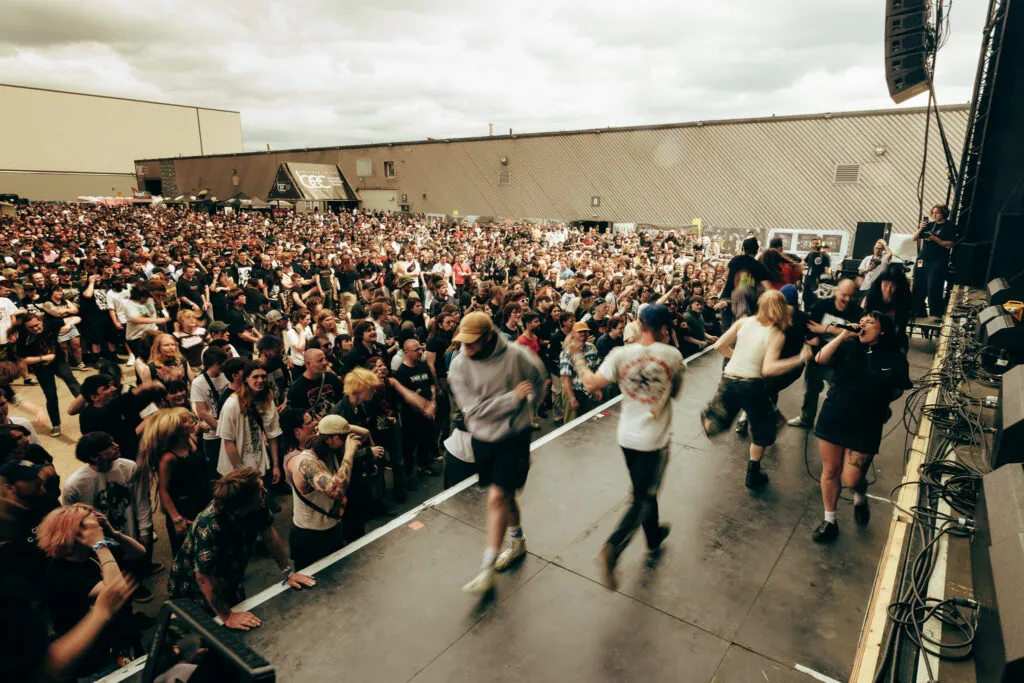

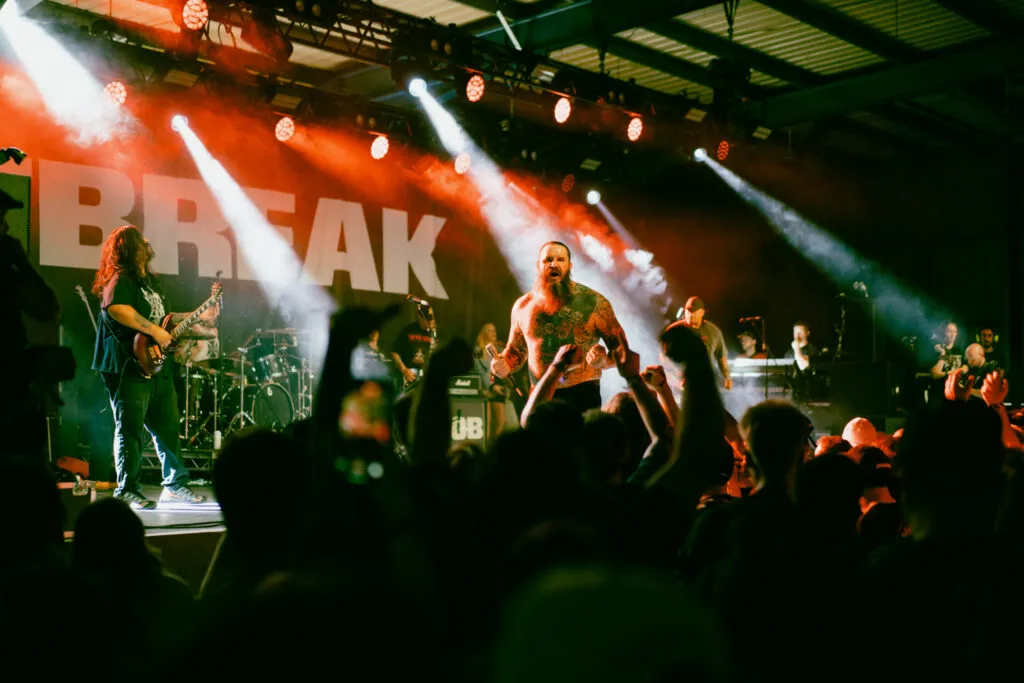

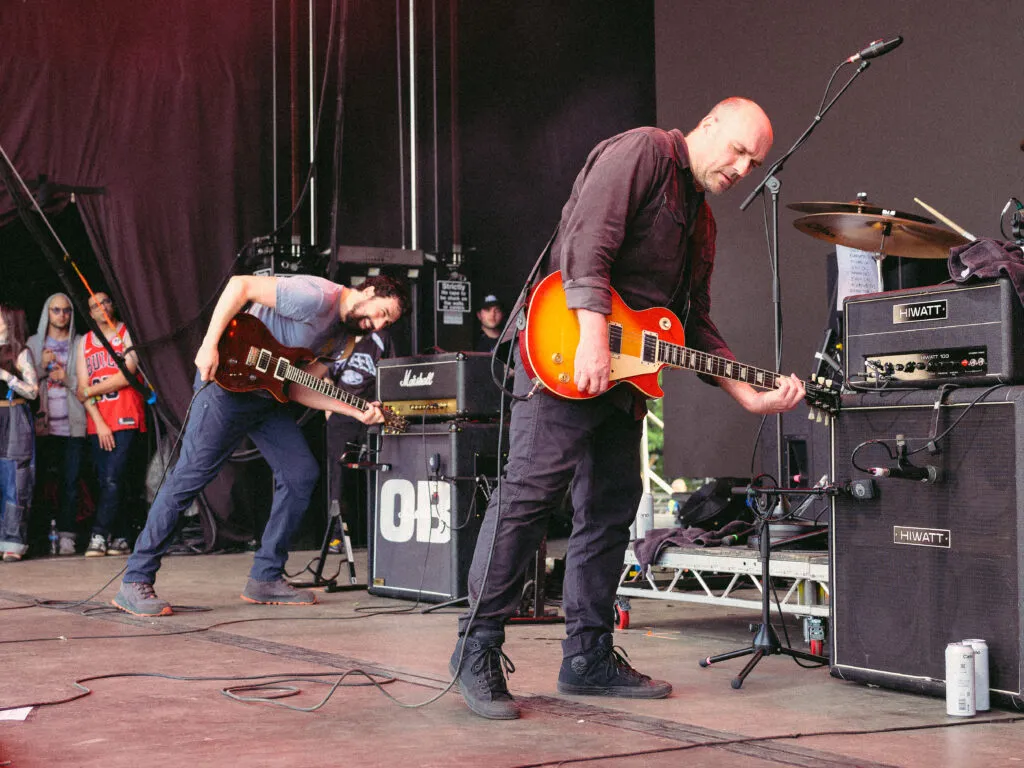
From top left: Pest Control (Nat Wood), Superheaven (Nat Wood), God’s Hate (Eddy Maynard), Speed (Nat Wood).
Representing Sydney’s HC scene today are Speed who come in hot back on the main stage after bringing the same relentless energy and sense of community at its core. They rip and tear through eight songs, vocalist Jem Siow, stomps across the stage telling the audience to “get on the floor and spit in his face”, he takes his shirt off mid-set (definitely not the first vocalist to do so at this event) and it looks a bit like a scene from the film 300, he controls the hoard of chaos that is the audience dive bombing across him, falling into him at times. The guitars have that sprawling, wheeling sound that was more common amongst eighties HC bands like Cro-mags, before the scene gave out to a more nu-metal inspired chug. They play ‘The First Test’ which is probably the only time anyone’s ever combined a flute riff into this style of music and people proceed to run riot and grab Siow as he purposely negotiates various pit-athletes.
After the carnage of Speed, Superheaven feels like an exhale. Grunge as gospel, with enough melody to pull you in and just enough distortion to justify your ripped tanktop. They were criminally overlooked a decade ago; but seem to be fully embraced now. Opening with the slow-burn ache of ‘Numb to What Is Real‘, they leaned straight into the emotional density that sets them apart. ‘Youngest Daughter’ gets the loudest crowd response, but it’s ‘Life in a Jar’ and ‘Stare at the Void’ that really underline what makes them hit so hard, that blend of 90’s apathy and yearning, which, although a tad depressed, is somehow more comfortable than the schizophrenic contradictions of post 9/11 cultural outputs.
Deafheaven turn the arena into a cathedral of flickering strobes and blackened bliss. Their set is shrouded in seizure-inducing light, and feels like time has stopped. Equal parts terror and transcendence, it’s something closer to ritual than performance. Secured in midst of the pit, I get my first real taste of the heat in circulating in this space – thick, humid, almost holy. The guitars ring a purgatorial shimmering cacophony that never quite reaches it peak. Vocalist George Clarke commands the stage like a preacher possessed, gesturing with outstretched arms as if ushering us into the void. At times it’s impossible to tell where one song ends and another begins, everything bleeding into everything else, until it stops, suddenly, surgically, and all that’s left is the ringing in your ears and the faint sensation of being changed, just a little.
Denzel Curry gamely tries to bring a rap edge to a crowd that had just spent several hours hitting each other in the chest. He steps onto the main stage with the confidence of a headliner, but it’s quickly apparent that this is more about optics than energy. Festival security are positioned along the front of the stage (the only act all weekend to do so), giving the impression that he might need protection from a crowd that, frankly, wasn’t all that bothered. The music itself isn’t the issue necessarily, his delivery is as slick and forceful as ever but the set feels more like a brand activation than a live performance.
A member of his team scours the stage recording equipment in hand, the whole set up clearly more focused on capturing the moment than creating one, because to a “rap” audience, people running across the stage is going to look “insane”; we all know, however, that these are actually the tamest crowd antics all weekend. He never really connects with the audience beyond the lens. A wall of death is called mid-set, to a slow-tempo track, no less, and this lands with an audible thud. Meanwhile his marketing team are scanning the crowd for the shot that might make this all look like it went off. It’s not that he bombs per-se, but he never really gives the room a chance to meet him in the middle either. In a weekend full of unfiltered, unpolished chaos, this was the one moment that felt like the spectacle mattered more than the show.
If anything could pull the crowd back from Denzel’s brand-managed buffer zone, it’s Knocked Loose. From the moment they walk on, the tone resets — no cameras, no content capture, just pure, pulverising intent, in fact, at one point they vehemently demand people put phones away for a real wall of death. They don’t need to reinvent the breakdown. They simply sharpen it into something so precise and punishing that the audience moves on instinct. It’s about impact and the sheer, merciless thrill of watching a crowd detonate in sync. A brutal, beautiful end to a weekend that never once hits the brakes.

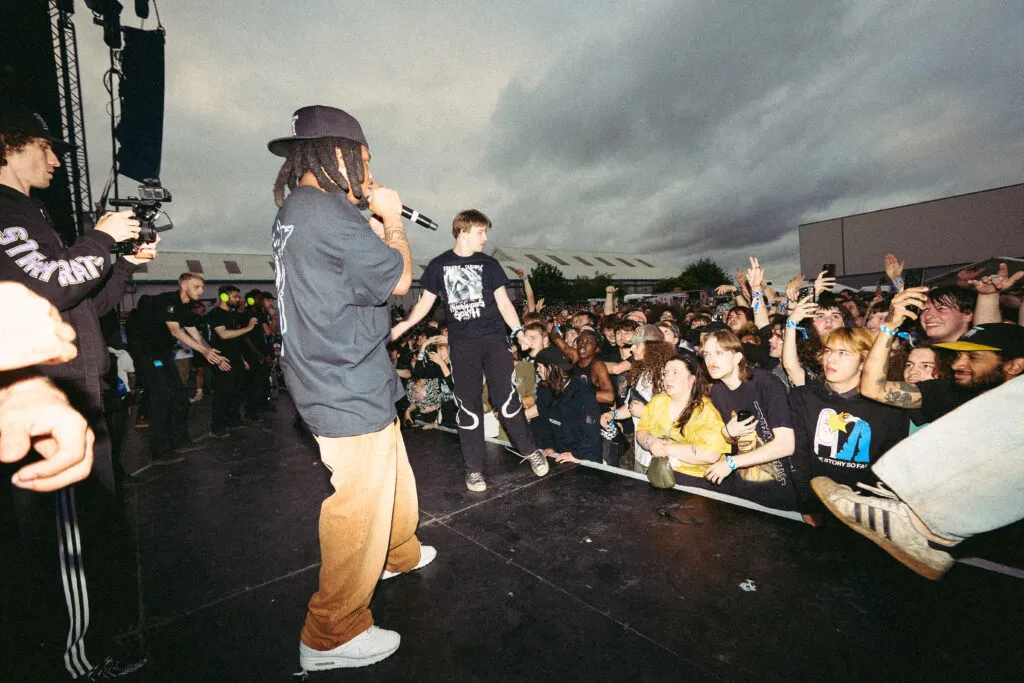
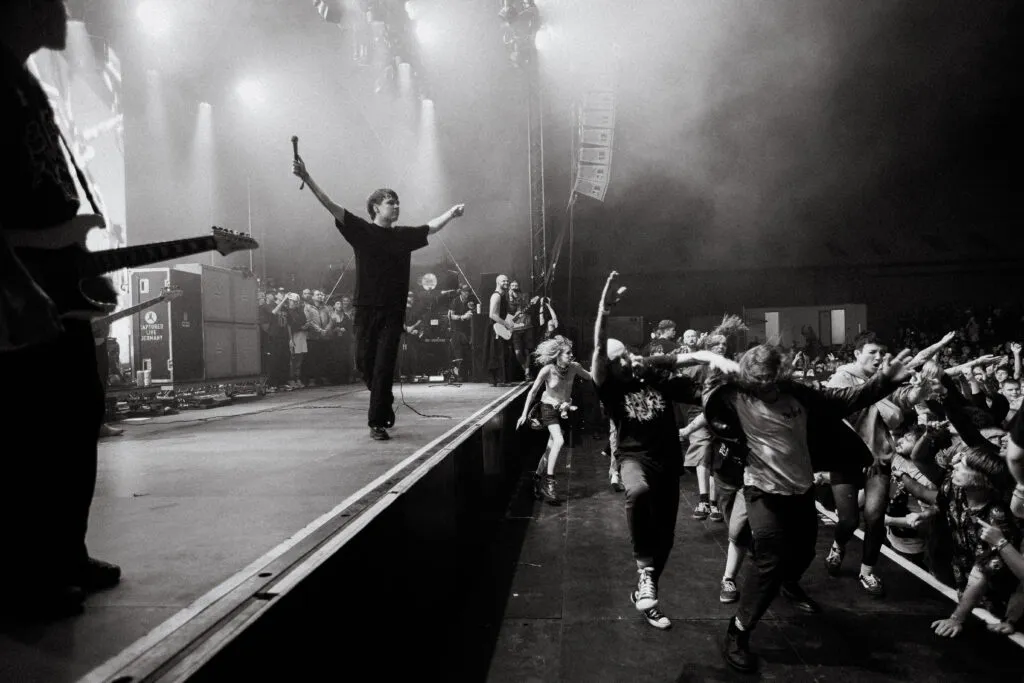
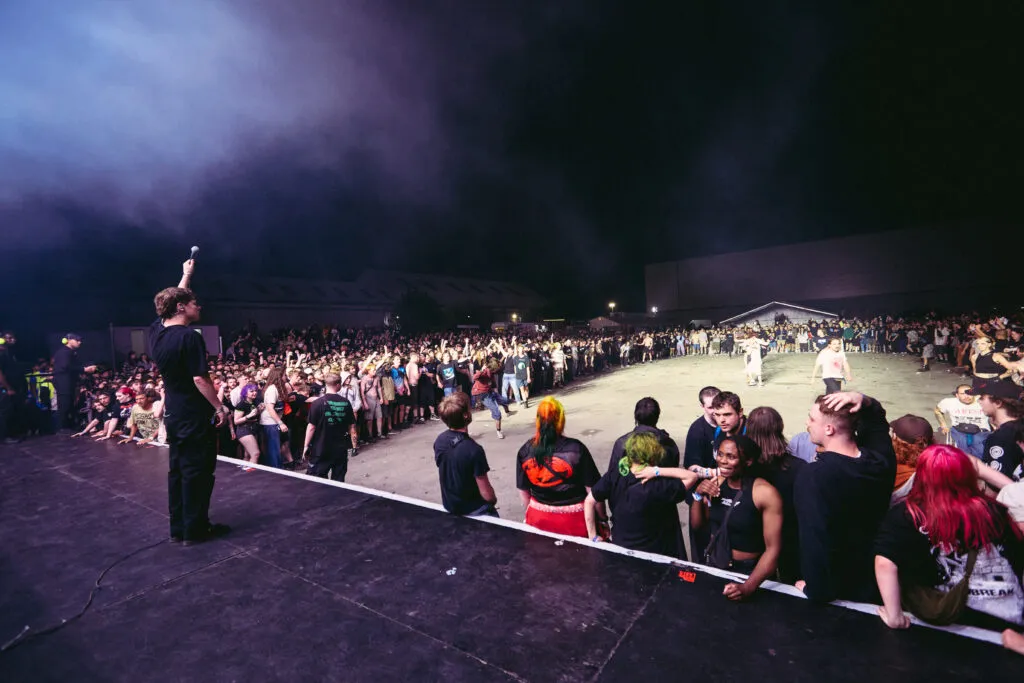
From top left: Deafheaven (Nat Wood), Denzel Curry (Jamie Carmichel), Knocked Loose (Jamie Carmichel).
Final Thoughts
Outbreak 2025 didn’t clean itself up. It got weirder, heavier, more emotional, and even less predictable.
Where else can you see shoegaze legends float through mosh pits, or glitch-pop provocateurs scream through breakdowns? Where else does a Sunday line-up feature a flute breakdown, a wrestler, and half the audience on stage?
It’s not about genre anymore. It’s about energy. About release. About making a mess and finding something transcendent inside it. Outbreak is like a two-day identity crisis, screamed back into coherence by the kids in the pit. Long may it remain ungovernable.
What’s maybe most remarkable, though, is how respectful the chaos remains. Despite the sheer volume of stagedives, wall-of-death attempts and flailing limbs, the vibe on the ground is radically supportive. The ethos of “look after each other” isn’t just printed on signs across the arena, it’s really lived. If someone goes down in the pit, they’re picked up instantly. No one’s storming the stage during quiet moments. No one’s out there to hurt anyone.
And it’s worth noting: among all that carnage, you could see the biggest guys in the room making space, shielding people smaller than them, watching out for those around them without patronising or policing. Everyone gets to be part of it, and everyone gets to feel safe doing it. That, more than anything, might be what sets Outbreak apart.
Feature image by Eddy Maynard.