Two songs deep into their set, Lifeguard’s lead singer and rhythm guitarist Kai Slater compared the Chicago noise-pop and post-punk band’s arrival in Britain to The Beatles’ “Ed Sullivan moment”. He does so in a characteristically self-deprecating way, explaining how, “with how British we sound”, playing in London felt like a homecoming for them. The metaphor could be extended for the audience too: it felt like an awakening as much as a cultural slap in the face. Lifeguard means true punk: they stand with their feet a metre abreast; they thrash at suspended power chords with enough ferocity to snap the centimetre-in-diameter G string; their melodies vary between two notes, or one note. In concert, it was a total and complete revelation.
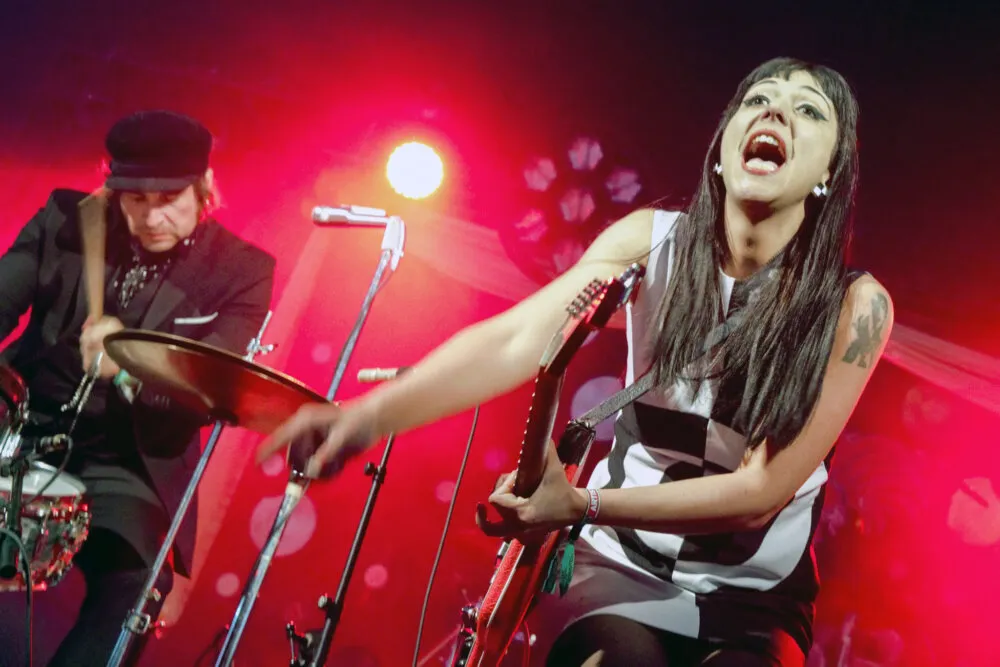
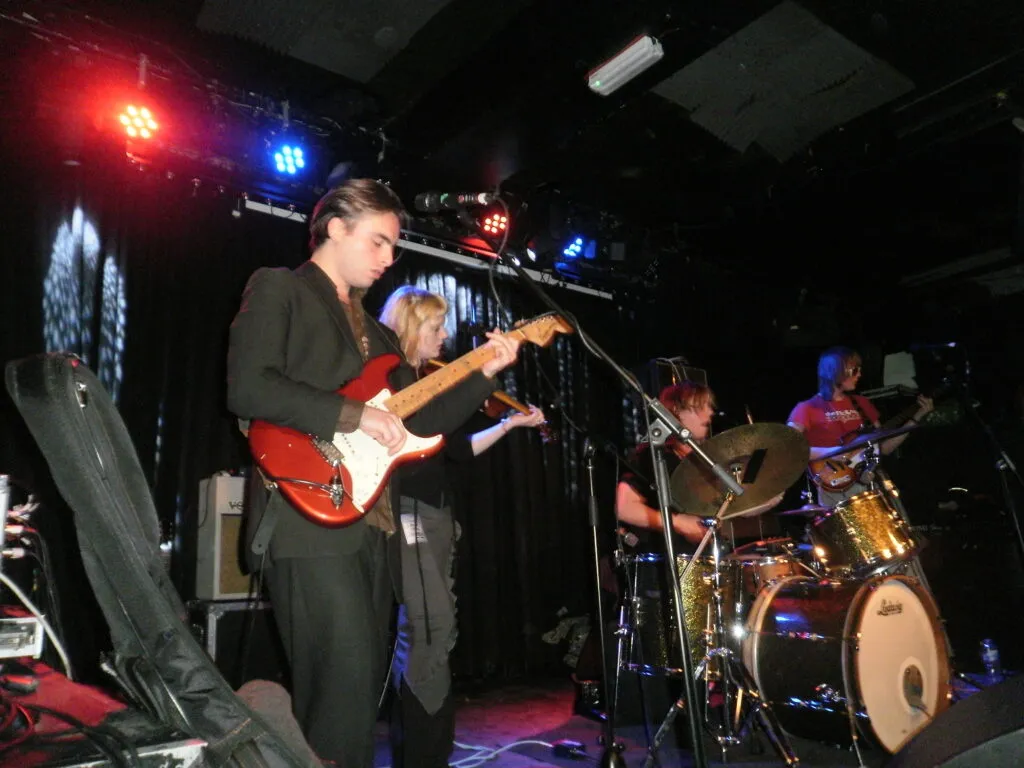
Opening band Blousey, as my bias initially led me to believe, appeared symptomatic of an endemic post-rock sound that has become the bread and butter of London venues. In the same way if you went to a gig in Seattle in 1995, you were inevitably going to be spoon-fed unappetizing grunge, gig-going in London necessitates gawping through a six-minute Godspeed You! Black Emperor dirge. My bias means it would not have been hard for Blousey to defy expectations. And they did! Their second song switched tack dramatically with a Roxy Music-invoking organ lick, a track which referenced upbeat glam rock and even held space for Motown brass. The ensuing set revealed a band which could deliver swampy, Southern psychedelia and glam punk of equal intensity, nestled somewhere between The Brian Jonestown Massacre and New York Dolls. Despite a rather cramped mix (there is no need for full bass chords; let the strings and sax sing please), Blousey is worth paying attention to.
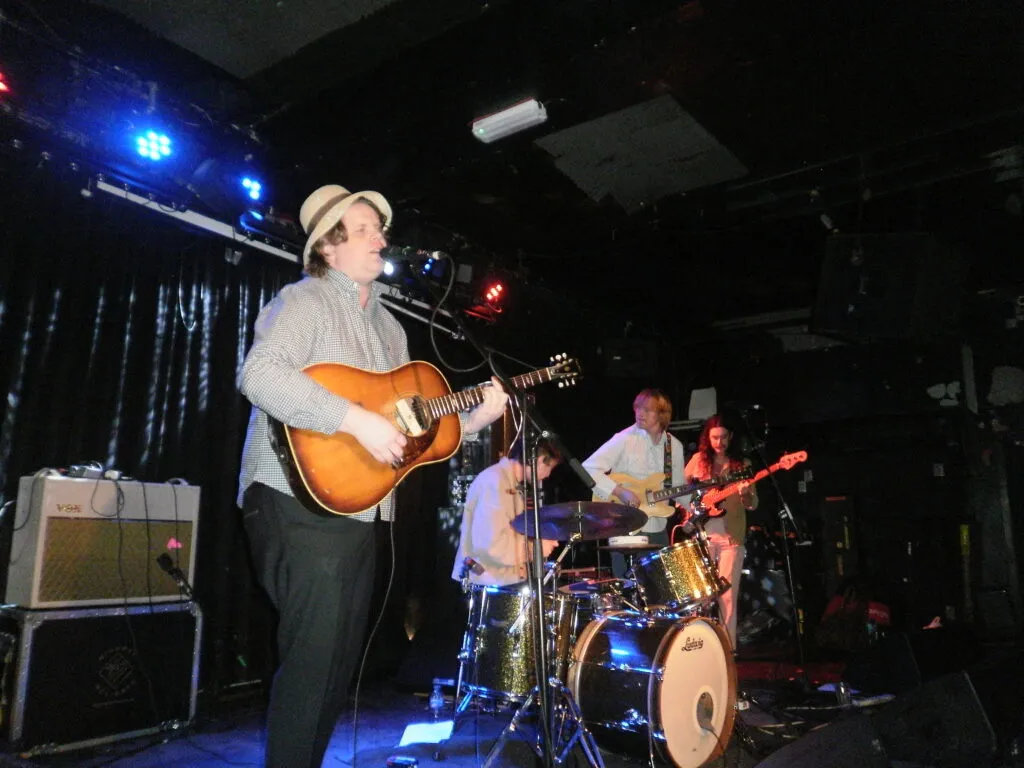
The Roves performed next, serving a hybrid pop-Americana and country rock. Their sound is driven by bright acoustic guitars and equally sparkly, jangling hollow body guitar arpeggios, complimented by beachy, tastefully affected vocals unafraid to venture into three-part harmonies. Playing their first London show since they were “discovered” by Lifeguard in the US, their effervescent live show is a joy to behold. They evoke the sound of early noughties indie band The Thrills, a tragically forgotten Irish band which drew from alt-country and 1960’s British rhythm and blues, a vibe completed by their y2k look which celebrated long fringes and Western shirts. The Roves are relentlessly unpretentious – speaking to their lead singer after the show, he shrugged his shoulders at the suggestion of a UK alt-country revival. The Roves, as they have done for years, are simply doing their thing. Co-signed by Lifeguard, who were inexplicably losing their minds in the front row as the oblivious Roves effortlessly breezed through sunshine country, The Roves are easy to like, and easier to love.
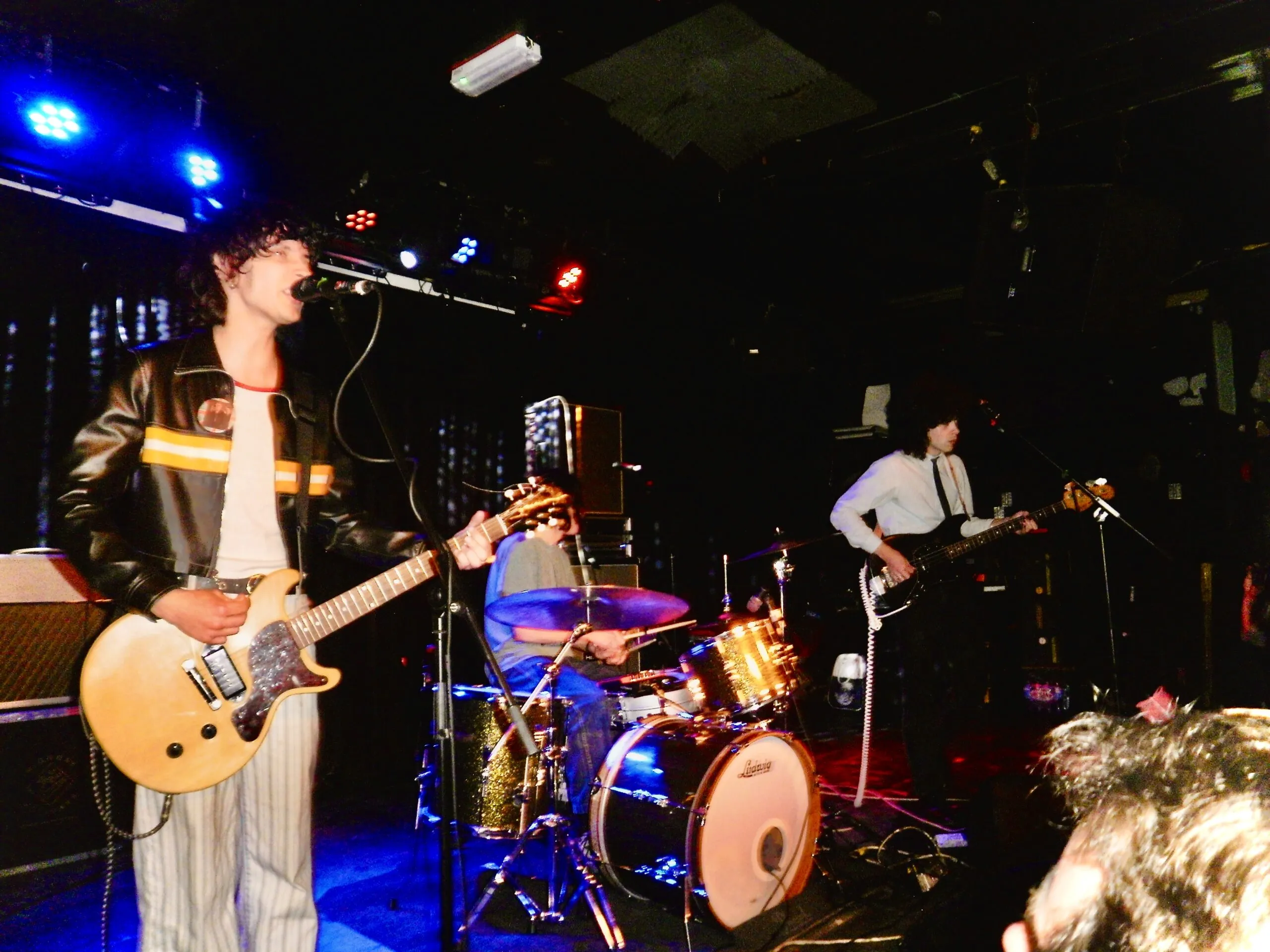
When it came time for Lifeguard to take the stage, they kept their aesthetic references on their sleeves – or on their chests, more accurately. Kai, with his Hedi Slimane-tiny leather jacket and skinny flares, guitarist and sometime bassist Asher adorned with the skinniest tie since Cheap Trick were gracing arenas, and drummer Isaac wearing a t-shirt most notable for its enormous collar of swear, long hair draping over. It was unsurprising (though dope nonetheless) to hear Asher credit BDSM photographer Robert Mapplethorpe as his visual idol after the show. Also striking was the lack of guitar pedals at their well-heeled feet. In the style of The Birthday Party, famous for curating dystopian industrial soundscapes with only overdrive and fuzz, Lifeguard need nothing more than the ferocity of their strumming and old-fashioned distortion to create flashbangs of electric noise.
Comparisons do not suffice when describing the sound of Lifeguard. But it is my job: I will endeavour. They borrow from the classics of late 70’s art punk – Magazine and Gang of Four are evoked, with an angular, nervy, primal style of distorted power chords, an industrial starkness in their songwriting stemming from noise rock royalty Sonic Youth, and a protopunk attitude which recalls The Velvet Underground and The Modern Lovers. At the tender ages of 18 and 19, they have already designed a distinctive sound which feels unique to Lifeguard and Lifeguard alone. In fact, the only modern band they could be accurately compared to is Horsegirl, also natives of Chicago (or “Chi-raq” as Kai playfully refers to it). Isaac is even brother to one of the Horsegirl members.
The early standout track ‘It Will Get Worse’ showcases their stripped-down heavy distortion energy, an explosion of amphetamine-adjacent noise. From the slightly mathsy opening chords, to the memorable, slowly rising chorus, this aptly chosen single is packed with hooks from beginning to end. From this crowd-pleaser they slide into the mutant disco of ‘How to Say Deiser’ (a title which is unfortunately never actually unpacked.) The opening free-verse drumming reveals Isaac to be at the forefront of the world’s teenage drummers; his spitfire sticks moving with so much vigour they blur before the eyes. It quickly settles into a danceable disco groove, as an inquisitively noisy two-chord riffs blasts over the top. Its eccentric lyrics (“spun out, no place to go, we don’t ask, and we don’t show / Your face all around, don’t stop to wear a frown“) complete the picture of raw abstraction, with the rough-hewn brushstrokes and situationist sloganism of a Basquiat.

One of the show’s highlights was a cover of The Jam’s ‘In The City’. Keeping in mind that The Jam are shockingly unknown in the US, it should not be surprising that Lifeguard have exceptional taste in which artists feed into their sound. Immaculately capturing the urgency, youth and rawness of the original version, it is simply one of the best live covers I have heard. Never veering into tribute territory (unlike The Molotovs, whom one of the audience members cursed as Lifeguard entered into their rendition), it delivered a payload of euphoria that literally caused me to tear up.
The latter half of the show was remarkable for their performance of ‘T.L.A’, one of the catchiest tracks off their debut album, released last Friday, ‘Ripped and Torn’. ‘T.L.A’ is pure evil. With a grinding descending series of notes underlying the melodic chorus, it most reminiscent of early Bloc Party. The closing, titular song felt almost nostalgic, its relatively slow and contemplative build leading to some divine guitar interplay evoking a late-night conversation where poignant reflections are exchanged between good friends. It could soundtrack a scene from The Goonies.
As a power trio, their garage rock foundations make them a special entry into the indie rock scene. Overstuffed with saxophones, organs and brass, most bands berate their audience with a wall of sound, as each instrument strains to muscle itself to the fore. Despite their noise-rock pedigree, silence and space is the most powerful weapon at Lifeguard’s disposal. What makes their industrial guitar bashing, incendiary beats and total lack of bass and some tracks so effective is that space between them, which makes each combustion of noise stunningly impactful. Despite their 1970’s art school feeling, there is no nerdy string fiddling to be found here, only youthful turbulence and Ramones-esque leaping into the air. “I don’t envy you trying to put what we just saw into words”, I was told by my photographer. The constant grinning between us during the show said it all.
Photographs by Will Walters