So, post-punk nostalgia seems to be having another moment.
You know the story: a young band finds the classics, adds some dub and art-school noise, works on debut with a gatekeeper producer, then either vanishes or ends up opening for Fontaines D.C.
But this is not Lifeguard‘s story.
While the teenage trio from Chicago have all the usual ingredients—angular guitars, infectious exuberance, a fondness for This Heat and Swell Maps— they’re not revivalists. Ripped and Torn, their full-length debut, is both tighter and more unruly than expected. And crucially, it feels lived-in, not just worn like a vintage leather jacket.
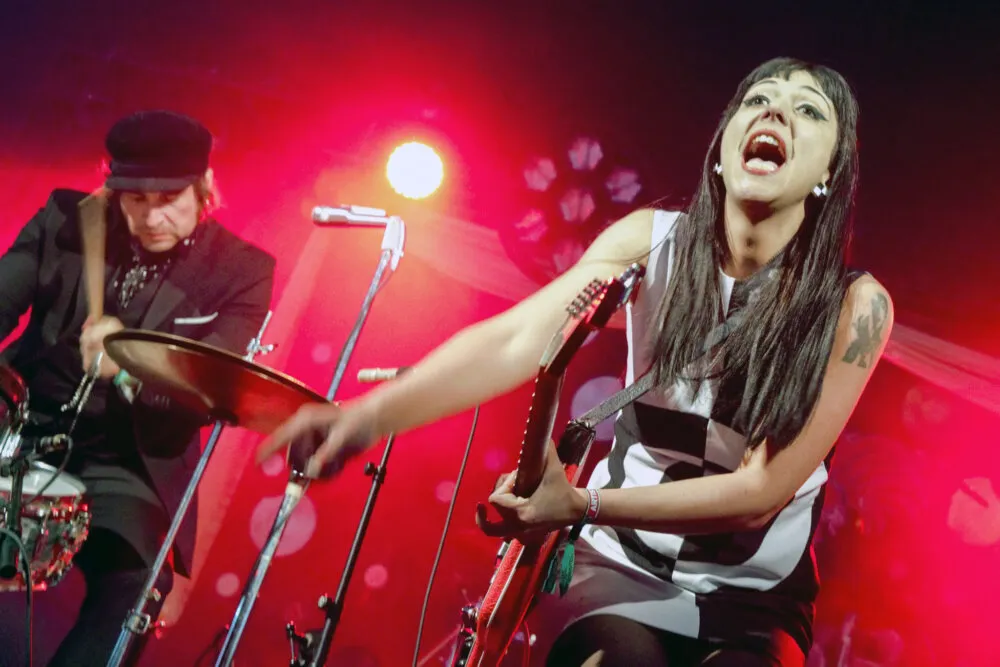
The band — bassist Asher Case, drummer Isaac Lowenstein, and guitarist Kai Slater — formed in their early teens. Too young for venues, their formative years were spent playing wherever they could: bike shops, school gyms, gift shops, even the odd grocery store. That scrappy, resourceful energy is baked into Ripped and Torn. The songs don’t unfold so much as detonate, collapse, or double back on themselves. The recordings sound unstable and immediate, coaxed into existence by producer Randy Randall (No Age), who smears everything with the right amount of grease and hiss. The drums snap like they’re being played in a cupboard; the guitars scream and recoil, rarely settling. Vocals—shared between Case and Slater—slip in and out of focus, sometimes submerged, sometimes shouted, always emotionally precise.
Their previous Matador EPs hinted at range, and that’s deepened here with a leaner, hungrier edge. The first 15 seconds of opener ‘A Tightwire’ is insistent and that grip barely lets go for the next 30 minutes. ‘It Will Get Worse’ starts in d-beat territory—ferocious, brittle—then lurches into off-kilter breakdowns that feel almost improvised. Live favourite ‘Under Your Reach’ is all musical misdirection: a horror-film organ drone initially suggests a drift into post-rock, before the track erupts into false starts, sharp turns, and guitar riff that could be from a Wire B-side. Add some unexpected vocal harmonies, and we get three-and-a-half minutes of glorious, dissonant disintegration.
‘How to Say Deisar’ and ‘(I Wanna) Break Out’ showcase Lifeguard’s frayed, unpredictable (or maybe deliberately imprecise) attitude to their songs. While the band might bristle at the analysis, the comparisons come to mind thick and fast: Blonde Redhead, early Iceage, The Buzzcocks, even flashes of The Rapture’s angular dance-punk. But Lifeguard don’t cling to any of these ideas long enough to be considered anywhere near pastiche. There’s as much Bloc Party as there is Patsy Cline lurking in Case’s songwriting instincts as there is Deerhoof in Lowenstein’s rhythmic jolts. ‘Like You’ll Lose’ even flirts with dub, its bassline booming under loops of delay and ghostly percussion. It’s not slick, and thankfully, not particularly reverent either. Dub, for Lifeguard, feels less an influence than a texture—just another unstable element to pepper their ever-fracturing mix.
The unexpected pivot comes on the title track, ‘Ripped + Torn’, with the band at their most bruised, melody frayed and lyrics unusually clear. “The motion like breaking a glass,” they sing, followed by the half-taunt, “You’re teacher’s pet, reading Ripped and Torn”— and for a moment, everything else falls away.
What’s most striking about these songs isn’t just how they sound, but how they move. There are no hooks, only moments: a guitar stab that lands like a slap, a lyric that dissolves mid-line. No chorus to cling to. There’s no sense of a central point, or anchor. Everything stays in motion—in friction, in flux. You either fall in, or you don’t.
Lyrics throughout remain mostly cryptic, suggestive phrases rather than statements. “Words like tonality come to me,” they repeat on closer ‘T.L.A.’ Everything else is abstract. It’s unclear if they’re joking or theorising—but that’s sort of the point. This is music that resists clarity on purpose. It’s not about ideas so much as gestures, collisions, and sudden temperature shifts. Lifeguard write music about the act of making it. They play like they’re still figuring out what each song means and that leaves space for the listener to do the overthinking – to revel in the metaphors and generally build the myth of Lifeguard for them.
Ripped and Torn is not a manifesto, and yet, there is something quietly radical in the way they operate. Each member has their own creative outlet—Case writes country-inflected solo material; Lowenstein makes Autechre-adjacent synth experiments as Donkey Basketball; Slater publishes Hallogallo, a self-typed, hand-bound zine that interviews both underground peers and legends like NEU!’s Michael Rother and Laetitia Sadier of Stereolab. That network of influence and curiosity underpins the band’s approach—openness over polish, engagement over marketing. A youth collective in Portugal has even cited their local scene as directly inspired by Lifeguard’s example.
It’s tempting to view Ripped and Torn through the lens of past scenes—year-zero punk, post-hardcore, mohair-draped indie—because it evokes them with such fluency. And yes, it might invite comparative commentary from a few so-called 6Music dads (something this review is also guilty of), but this record doesn’t belong to them. Lifeguard are writing for each other, for now, and for anyone who still believes that youth isn’t a phase—it’s a way of listening. Ultimately, Ripped and Torn is a messy, shivering, beautifully rickety debut with nothing to prove and everything to feel.
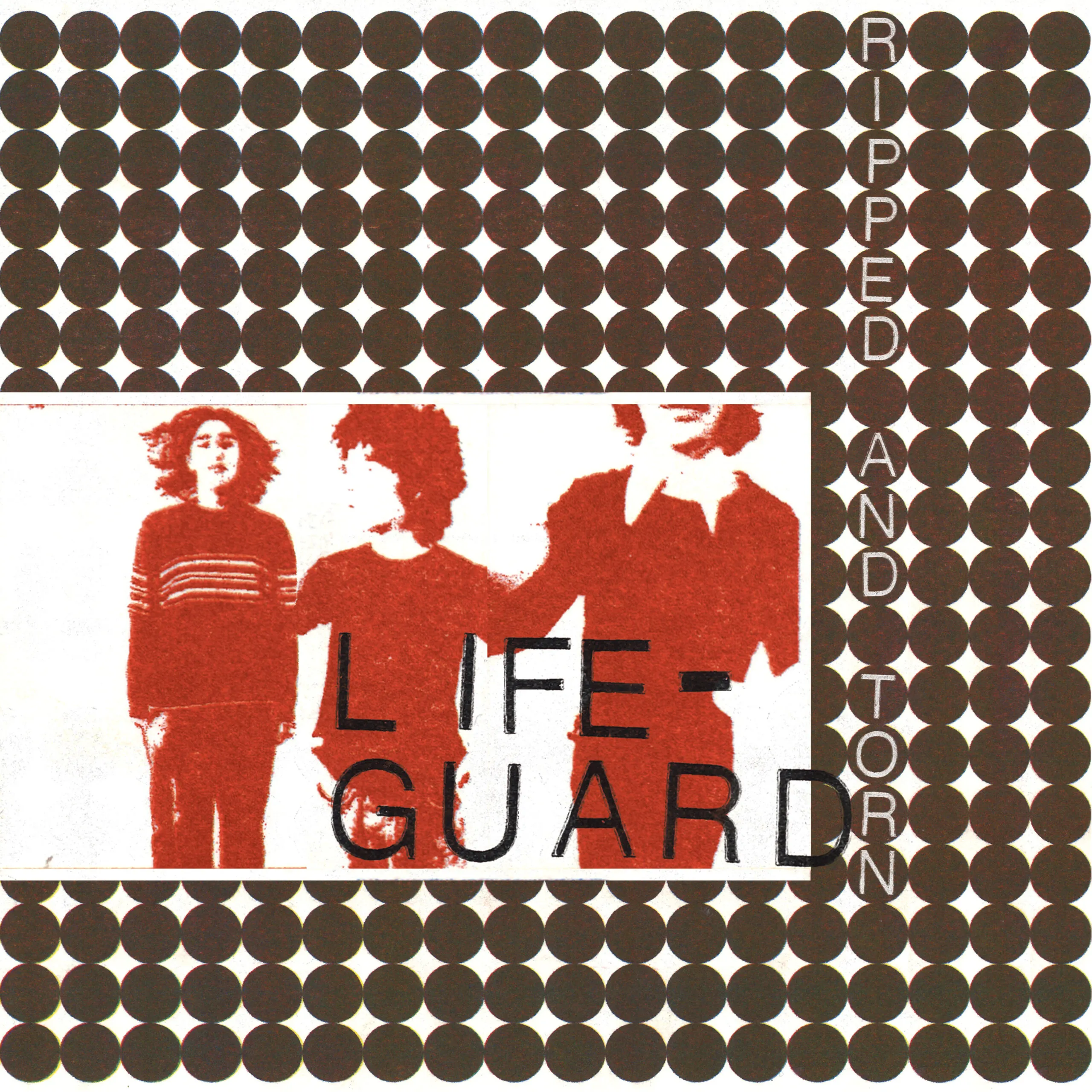
‘Ripped and Torn’ is released on 6th June via Matador Records